

Vitalik Buterin Builds 'Paranoid Mode' AI Agent Setup Using Tor, Cover Traffic and zkAPI

Published October 18, 2026, 01:37 PM PKT. Based on Vitalik Buterin's October 16, 2026 X post (primary source), CoinMarketCap Academy's coverage (secondary source), news.bitcoin.com's October 18, 2026 report (secondary source), crypto.news (secondary source), ForkLog (secondary source), and Blockonomi (secondary source).
Ethereum co-founder Vitalik Buterin has built an experimental "paranoid mode" for his AI agent harness, pi, a privacy wrapper that hides who is asking, what is being asked, and how the AI provider is paid. In an X post on Friday, October 16, 2026, Buterin described a stack that wraps zkAPI payments, the Tor anonymity network, random cover traffic and local prompt rewriting inside an OpenAI-API-compatible daemon, so the whole setup can sit between an agent and any existing model provider.
"Each conversation gets assigned a separate Tor circuit, your requests are masked with random cover traffic, zkAPI ensures you don't leak your identity through payments, and all prompts are locally rewritten," Buterin wrote, according to CoinMarketCap Academy's account of the post.
The four-layer privacy stack
The design targets the four ways AI services can identify users, according to news.bitcoin.com's summary: payment records, IP addresses, recognizable writing patterns, and the contents of submitted prompts. Each layer gets its own countermeasure. Conversations run over Tor on separate circuits per session, so sessions cannot be linked by IP address. Randomly generated cover traffic is interleaved with real requests, making it harder for an observer to tell which packets carry genuine queries. A local language model rewrites every prompt before it leaves the machine, stripping stylistic fingerprints and stray personal details; Buterin said the rewriting is bring-your-own-local-model and that he is using Qwen3.8-Flash-Next for it. And payments go through zkAPI, so the money trail cannot be traced back to the person making the request.
How the agent runs
The pieces are packaged as a daemon compatible with OpenAI's API format, which means existing agent software can use the privacy layer without knowing it is there, according to crypto.news. Buterin said his pi agent harness runs inside a Bubblewrap sandbox wrapped with torsocks, "so everything it does goes through Tor," and that he is experimenting with micro virtual machines as an additional isolation mechanism, ForkLog reported.
Buterin said the setup is "getting quite usable," though he acknowledged the cost: noticeably higher latency, especially when starting a new conversation, when a fresh Tor circuit has to be built and the handshake completed.
What still leaks
Buterin was blunt about the limits. "Tor is far from optimal here for privacy," he wrote. The cover-traffic mechanism is acceptable against passive adversaries, he said, but "much weaker if the LLM provider is colluding with the guard and actively manipulating timing." In that scenario, an AI provider working with the Tor entry node could use timing correlation to link requests to a user despite the cover traffic, according to Blockonomi's reading of the post.
The local rewriting also stops short of full privacy: the provider still sees the rewritten prompts, so it learns what was asked, just not who asked it or how they normally write.
Why zkAPI matters
zkAPI is the newest piece of the puzzle. The privacy-preserving payment system was built by Open Anonymity in collaboration with the Ethereum Foundation and launched on Ethereum mainnet on October 1, according to news.bitcoin.com. Users deposit cryptocurrency, including ETH or USDC, into an Ethereum-based vault and receive private credits they can spend on AI and other APIs; zero-knowledge proofs let the service verify a user can pay without learning which on-chain deposit is theirs, the reports said. Buterin added that "much cheaper" zkAPI deposit and withdrawal gas costs are coming to mainnet soon, though no deployment date has been confirmed, according to crypto.news.
A mixnet is the real answer
Buterin's proposed fix for the remaining weakness is to stop relying on Tor and build something purpose-made. "This kind of task really requires a more specialized mixnet," he wrote, accepting the tradeoff of "a higher bandwidth multiplier and built-in constant cover traffic," ForkLog reported. Constant background traffic, unlike random cover bursts, gives a colluding adversary no quiet windows to time-correlate, and mixnets can be tuned for the exact traffic patterns AI agents produce. He also published the relevant code, though the privacy-enabled branch is described as experimental and not a production release.
This article is news reporting and is not investment advice.
Sources
- Vitalik Buterin, October 16, 2026, primary source: X post announcing the "paranoid mode" wrapper for his pi agent harness; wraps zkAPI, Tor, extra cover traffic and local LLM prompt rewriting in an OpenAI-compatible daemon; each conversation gets a separate Tor circuit; requests masked with random cover traffic; zkAPI prevents identity leaks through payments; all prompts locally rewritten, bring-your-own-local-model, he uses Qwen3.8-Flash-Next; agent harness wrapped with a Bubblewrap sandbox plus torsocks so everything goes through Tor; experimenting with MicroVM isolation; "getting quite usable" but increased latency, especially when starting a new conversation; "Tor is far from optimal here for privacy"; cover traffic okay against passive adversaries but much weaker if the LLM provider colludes with the guard and actively manipulates timing; calls for a specialized mixnet with a higher bandwidth multiplier and built-in constant cover traffic; "much cheaper" zkAPI deposit and withdraw gas costs coming to mainnet soon
- CoinMarketCap Academy, secondary source: described the October 16 post in detail, including the Friday timing of the announcement; each conversation gets its own Tor circuit and zkAPI payment, with a locally run model rewriting prompts before they reach the AI provider; zkAPI payments in ETH keep identity hidden; "getting quite usable" but adds latency; Tor cover traffic much weaker if the AI provider colludes with a Tor guard node; zkAPI brought private AI payments to Ethereum mainnet earlier this month
- news.bitcoin.com, October 18, 2026, secondary source: the setup addresses four identification vectors (payment records, IP addresses, writing patterns, prompt contents); each conversation assigned a separate Tor circuit; local model rewrites prompts before forwarding; uses Qwen3.8-Flash-Next; OpenAI-compatible daemon; Bubblewrap sandbox and torsocks routing; zkAPI launched October 1 by Open Anonymity with the Ethereum Foundation; users deposit ETH or USDC into an Ethereum vault and receive private credits
- crypto.news, secondary source: open-source privacy system combining Tor routing, anonymous payments and locally processed prompts; OpenAI-compatible daemon interface; sandbox restrictions route network activity through Tor; usable but slower response times and weaknesses against coordinated traffic analysis; cheaper zkAPI deposit and withdrawal costs expected on mainnet, no date confirmed
- ForkLog, secondary source: published GitHub branch with the "paranoid mode" wrapper; full quote of the October 16 post including the sandbox, torsocks and MicroVM details; mixnet proposal with higher bandwidth multiplier and constant cover traffic; zkAPI built by Open Anonymity in collaboration with the Ethereum Foundation
- Blockonomi, secondary source: privacy-focused wrapper combining Tor routing, zkAPI payments, cover traffic and local prompt rewriting; separate Tor circuit per conversation; random cover traffic disguises request patterns; Bubblewrap sandbox with MicroVM isolation under experimentation; considerable latency especially on new conversations; Tor offers limited protection against active timing attacks involving collusion between an AI provider and a network guard
MABOnChain Daily Brief
The key crypto and markets stories in one short, plain-language email. Free. Unsubscribe any time.
Prefer chat? Join us on Telegram Watch on YouTube
Keep reading

Nine Companies, Including Broadcom and Verizon, Formally Object to OKXICE Tokenized Share Trading
Nine U.S.-listed companies, including Broadcom, Verizon, CoreWeave and UnitedHealth, filed formal issuer objections in an October 15, 2026 OKXICE notice, using the SEC's issuer-objection mechanism to keep their shares off the 24/7 tokenized stock venue. Eight of the nine were among the 63 tickers OKXICE named on October 4; the venture says it still plans to launch with dozens of stocks including Nvidia and Apple.

Bitget Names Russia, Belarus and Kazakhstan as Prohibited Jurisdictions, Bans 20 Sanctioned Platforms
Bitget's English Terms of Use, updated October 16, 2026, list Russia, Belarus and Kazakhstan among its prohibited jurisdictions, three days after the exchange said it would discontinue services for selected users in a one-off exercise. Separately, the exchange's Greater China arm said it will terminate accounts that transact with 20 sanctioned platforms, including BitPapa and NoOnecrypto, with a permanent no-re-registration rule for violators.

EU and 8 Nations Sign Warsaw Protocol to Seize Criminal Crypto Across Borders
The European Union and eight countries signed the Additional Protocol to the Council of Europe's Warsaw Convention in Strasbourg on October 14, 2026, writing crypto-assets explicitly into the international framework for seizing criminal proceeds. The protocol lets authorities confiscate virtual assets urgently without prior notice, gives financial intelligence units power to suspend suspect crypto transactions, requires Asset Recovery and Asset Management Offices in signatory states, and needs five ratifications to enter into force.
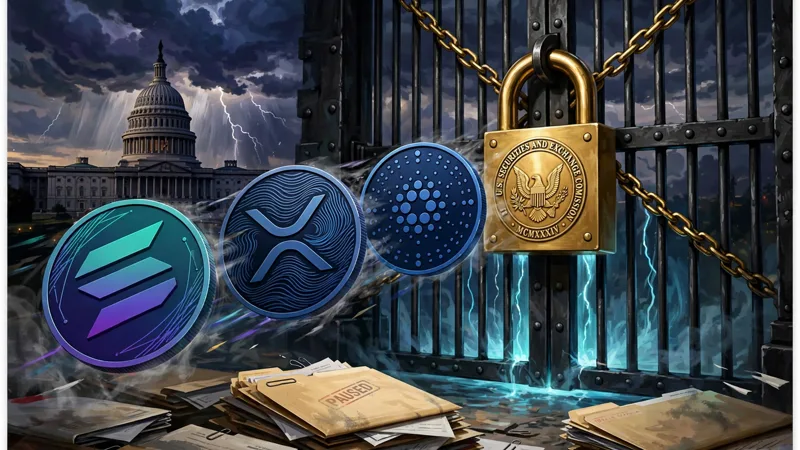
US Shutdown Freezes SEC Review of 100-Plus Crypto ETF Filings as Solana, XRP and Cardano Launches Stall
The US government shutdown has frozen the SEC's review of more than 100 crypto ETF filings, stalling expected October launches for Solana, XRP and Cardano products. Decision deadlines on three XRP ETFs and Grayscale's Cardano ETF passed silently this week, and Bloomberg's Eric Balchunas says the October 6-10 Solana window that issuers had high conviction about is now threatened. CoinShares' James Butterfill says up to $60 billion in ETP inflows is still possible this year once Washington reopens.

South Korea Summons Five Exchanges to October 20 Tax Hearing as 22% Crypto Tax Looms
South Korea's government will convene representatives of Upbit, Bithumb, Coinone, Digital X and GOPAX, plus the DAXA industry body, on October 20 to hear industry views on a planned 22% tax on virtual asset transfer and lending income starting January 1, 2027. The tax, already postponed three times since 2020, would apply a 20% other-income tax plus 2% local surcharge after a 2.5 million won basic exemption, while lawmakers have filed rival bills to push it to 2029 and 2030.

Treasury's GENIUS Proposal Forces US Exchanges Into Audit-or-Delist Choice on Foreign Stablecoins
The US Treasury's proposed GENIUS Act rules would let exchanges keep offering foreign-issued stablecoins only if they can defend the issuer's promise to comply with lawful US orders after reasonable due diligence, with reliance barred when the representation is false or the issuer cannot or will not comply. The Federal Register notice, published August 18, 2026 under docket TREAS-DO-2026-0496, takes comment through October 19, 2026 and sets an effective date of January 18, 2027, with a stricter permitted-issuer-only limit from July 18, 2028.

Circle Paid $819M of Its $1.4B First-Half Revenue to USDC Partners, Kept 7 Cents on the Dollar
Circle disclosed on October 16, 2026 that it generated roughly $1.4 billion in revenue in the first half of 2026 and paid about $819 million of it, 59 cents of every dollar, to USDC distribution partners and transaction costs. Chief commercial officer Kash Razzaghi said the company reinvested about $473 million in licenses, banking, liquidity, compliance and integrations, and kept 7 cents of net profit per dollar, in a direct rebuttal to new stablecoin entrants promising to share the majority of their economics.