

Thailand to Block Bitget From December 5 After SEC Files Criminal Complaint Over Unlicensed Trading
Published November 5, 2026, 9:45 PM PKT. Based on Cointelegraph's report of the Thai Securities and Exchange Commission's November 5, 2026 announcement (primary source), with additional reporting by crypto.news, Altcoin Buzz and Bitcoinist (secondary sources).
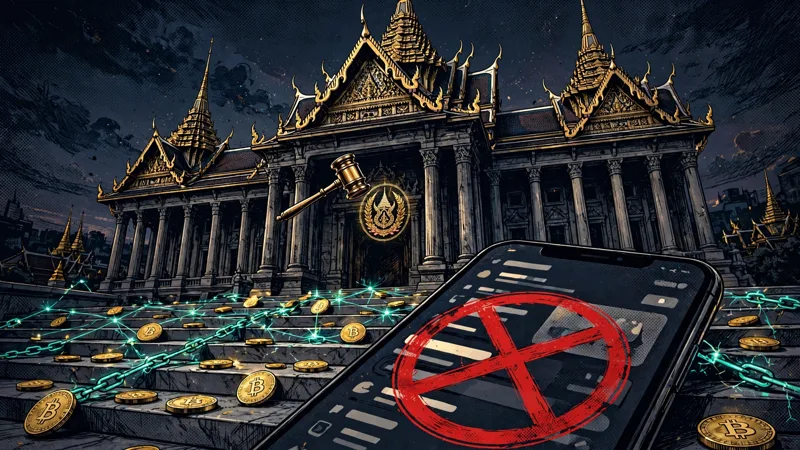
Thailand will block access to cryptocurrency exchange Bitget from December 5, 2026, after the country's securities regulator filed a criminal complaint against the exchange's operator for allegedly trading without a license. Thailand's Securities and Exchange Commission (SEC) said on Thursday, November 5, 2026, that it has filed the complaint against BG Limited, the company that operates Bitget, and has notified the Ministry of Digital Economy and Society to restrict access to the platform. The block will cover Bitget's website, its associated domains and its mobile app. The regulator advised users to take action regarding assets held on the platform before the deadline. The move is the latest in Thailand's crackdown on unlicensed platforms, and it lands two weeks after Bitget announced plans to buy its way into the country through a licensed local exchange.
The December 5 block
The SEC said it has asked the ministry to cut off access to Bitget from December 5, 2026, under Thailand's 2025 Royal Decree on Measures for Preventing and Suppressing Technology-Related Crimes, which gives the ministry authority to restrict access to unlicensed digital asset platforms. The restriction covers the exchange's primary website, its other domains and its mobile application, according to the regulator. The SEC urged users not to wait until the deadline to deal with assets held on the platform. "The regulator advised users to take action regarding assets held on the platform before the deadline," Cointelegraph reported, citing the SEC's announcement. Thailand introduced licensing requirements for digital asset businesses in 2018 and tightened the rules in April 2025 to cover foreign platforms targeting Thai users, a change that strengthened the authorities' ability to block access, according to Cointelegraph.
What the SEC says Bitget did
According to the SEC, Bitget offered crypto trading services in Thailand between 2022 and 2025, charged trading fees and promoted its services in Thai through its websites and social media channels, and those activities violated the country's digital asset business licensing requirements. The regulator said the activities met the definition of operating a digital asset exchange under Section 3 of Thailand's Emergency Decree on Digital Asset Businesses, introduced in 2018, and accused BG Limited of providing those services without a license under Section 26, an offense covered by Section 66 of the law, according to crypto.news. The complaint also names Kritsana Kritsananuwat, whom the regulator accused of helping promote Bitget's services through the Facebook page "Srisiam" and the YouTube channel "SRISIAM". The SEC previously filed a criminal complaint against him in March 2025 over allegations that he helped promote OKX's unlicensed exchange activities, according to Cointelegraph. Bitget did not immediately respond to Cointelegraph's request for comment.
A complaint, not a verdict
The filing does not establish criminal liability against BG Limited or the individual named in the complaint. The regulator filed the complaint with Thailand's Economic Crime Suppression Division for investigation, and prosecutors will decide whether to bring charges, while the courts will determine criminal liability, according to Cointelegraph. That process runs on a slower track than the access block, which the ministry can impose under the 2025 decree while the criminal case is investigated. The distinction matters for users and for Bitget: the December 5 block is an administrative restriction that takes effect on a fixed date, while any criminal consequences depend on the investigation, the prosecutors' decision and a court ruling.
The licensed-acquisition question
The complaint follows Bitget's October 20 announcement of plans to acquire GMO-Z.com Cryptonomics, a locally licensed crypto exchange and brokerage, through BTGT Management (Thailand), a company in which Bitget said it held an interest. The proposed acquisition remained subject to regulatory approval and other conditions at the time of the disclosure, and Bitget said it intended to introduce its trading platform to Thai users after completing the transaction and obtaining approval for the change of control. "Thailand is an important part of Southeast Asia's digital asset landscape, and this acquisition gives us a great opportunity to establish local operations," Bitget CEO Gracy Chen said at the time. The share transfer for that deal was moved to November 30, five days before the block starts, according to Altcoin Buzz, but the SEC's November 5 notice does not announce a decision on the acquisition. MABOnChain reported the acquisition plan on October 20. For now, the regulator's instruction stands on its own: users should act on assets held on Bitget before December 5, and the acquisition's fate remains undecided.
Sources
- Cointelegraph, Thailand to Block Bitget Over Unlicensed Crypto Trading, November 5, 2026 (primary source: Thai SEC filed a criminal complaint against BG Limited, Bitget's operator, for allegedly operating without a license; access block from December 5 covering website, domains and mobile app; activities between 2022 and 2025, fees and Thai-language promotions; Sections 3, 26 and 66 of the 2018 Emergency Decree; complaint filed with the Economic Crime Suppression Division; Kritsana Kritsananuwat named, with a prior March 2025 complaint over OKX promotion; licensing rules introduced 2018 and tightened April 2025; Bitget's October 20 plan to acquire GMO-Z.com Cryptonomics via BTGT Management (Thailand); Gracy Chen quote; Bitget did not immediately respond to a request for comment)
- crypto.news, Bitget faces December 5 block in Thailand over unlicensed crypto trading, November 5, 2026 (secondary reporting: SEC confirmed the action in a November 5 announcement; complaint referred to the Economic Crime Suppression Division; block under the 2025 Royal Decree on Measures for Preventing and Suppressing Technology-Related Crimes; filing does not establish criminal liability)
- Altcoin Buzz, Thailand Files Complaint Against Bitget, Sets Dec. 5 Block, November 5, 2026 (secondary reporting: share transfer for the GMO-Z.com Cryptonomics acquisition moved to November 30, five days before the block starts; SEC notice does not announce a decision on the acquisition; Kritsana Kritsananuwat was separately complained against in March 2025 over OKX promotion)
- Bitcoinist, Thailand's SEC Moves to Block Bitget as It Files Criminal Complaint, November 5, 2026 (secondary reporting: SEC announced the complaint on November 5; restriction covers website, associated domains and mobile application; users encouraged to review accounts and protect access to holdings before December 5)
This article is news reporting and is not investment advice.
MABOnChain Daily Brief
The key crypto and markets stories in one short, plain-language email. Free. Unsubscribe any time.
Prefer chat? Join us on Telegram Watch on YouTube
Keep reading
South Korea Delays Crypto Gains Tax to 2029 in Fourth Postponement, Adds Three-Year Loss Carryforward
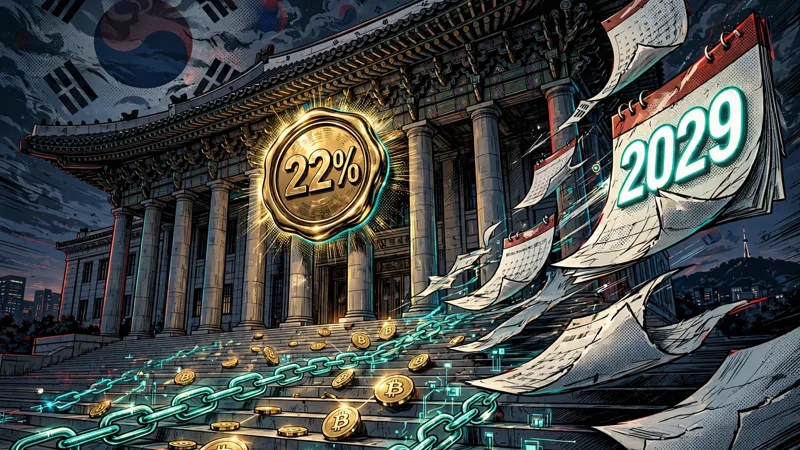
South Korea's government said on November 5, 2026, that it will seek a two-year delay of the planned tax on cryptocurrency gains, moving the start date from January 1, 2027 to 2029, the fourth postponement since the tax was legislated in 2020. Finance Minister Lee Hyoung-il announced the plan at a press conference in Seoul, saying the government will work with the National Assembly to amend the Income Tax Act. The government cited the start of virtual-asset information exchange with the United States in 2029 and the need to prepare the tax system, and it also plans a three-year loss carryforward so investors can offset future gains with past losses.

Bank of England Raises Rates to 4% in First Hike Since 2023, Warns Inflation Could Near 5%
The Bank of England raised Bank Rate by 0.25 percentage points to 4% on November 5, 2026, its first increase since August 2023, in an 8-1 vote of the Monetary Policy Committee. Catherine L Mann was the sole dissenter, voting for a larger 0.5 point rise to 4.25%. The Bank said UK inflation, at 3.5% in September, is now expected to rise to around 5% by the middle of 2027 before returning to its 2% target in the third quarter of 2028. Several committee members signalled further hikes are likely, though the Bank said policy is not on a pre-set path. Bitcoin ($BTC) traded near $80,100 after the decision, down about 3.7% in 24 hours, according to CoinGecko.
US Regulators Check Banks for Weak Spots After $6.3 Billion Binance Hack
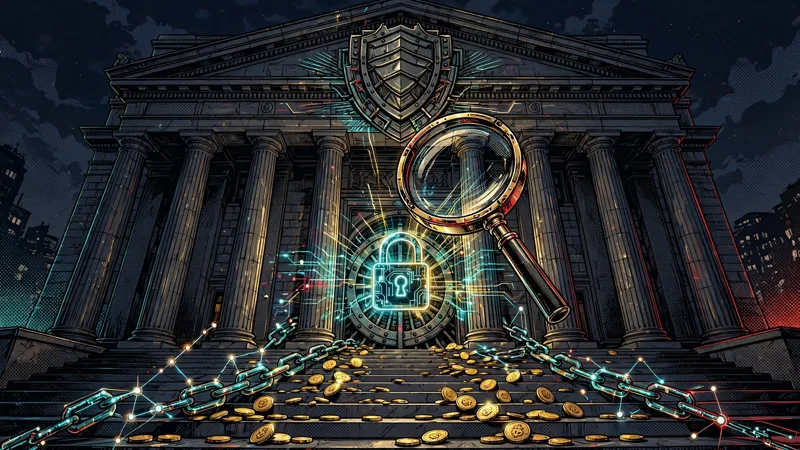
Supervisors from the Federal Reserve and the Office of the Comptroller of the Currency began contacting US banks on Monday morning, November 2, 2026, asking whether their systems had seen any unusual activity or disruption after the $6.3 billion Binance hack, according to Reuters. Banks are running their own diagnostics to defend against a similar attack, and a cybersecurity team at one of the largest US banks is preparing an internal report that could lead to a review of its systems and cybersecurity updates. No bank has reported a disruption so far, and the Federal Reserve and the OCC both declined to comment.

France's Stablecoin Tax and Wallet Reporting Fall Away as Assembly Rejects Budget 458-0
France's National Assembly rejected the revenue section of the 2027 state budget by 458 votes to none, with two abstentions, at first reading late on November 4, 2026, removing three crypto amendments from the bill that goes to the Senate. The amendments that fall away are the tax on gains from crypto-to-stablecoin conversions adopted on October 16, the rule requiring taxpayers to disclose self-custodied crypto holdings of at least 100,000 euros adopted on November 3, and an increase in penalties for crypto platforms that fail to hand over information requested by tax authorities, from 10,000 euros to 50,000 euros. The proposals could still be reintroduced in the Senate, which begins debating the finance bill on November 20, but they would have to survive the rest of the budget process to become law.