

Senate Passes DEATH BETS Act to Ban War and Death Wagers on Prediction Markets
Published November 20, 2026, 10:20 PM PKT. Based on the text of S.4035 published by the Government Publishing Office, the office of Senator Adam Schiff, and reporting from CoinDesk, The Block and Unchained, cited in the sources.
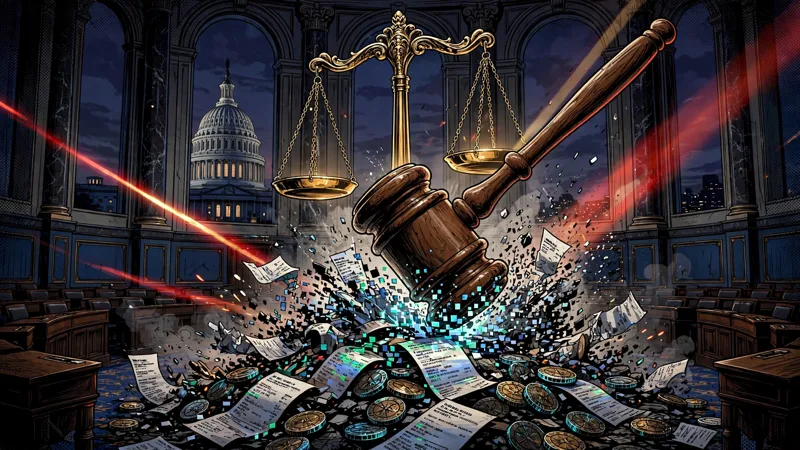
The U.S. Senate passed the DEATH BETS Act on Thursday, November 19, 2026, a bipartisan bill that would bar federally registered prediction markets from listing contracts tied to war, terrorism, assassination or a person's death. The bill, S.4035, cleared the chamber by voice vote at 6:47 p.m. Eastern, according to Senate floor logs, and now heads to the House of Representatives, where it must pass before it can go to the president for signature.
The bill was introduced on March 10, 2026, by Senator Adam Schiff, a Democrat from California, and co-sponsored by Senator John Curtis, a Republican from Utah. Its full title is the Discouraging Exploitative Assassination, Tragedy, and Harm Betting in Event Trading Systems Act. If it becomes law, it would amend the Commodity Exchange Act to prohibit any exchange or clearinghouse registered with the Commodity Futures Trading Commission (CFTC) from listing event contracts tied to terrorism, assassination, war, U.S. military operations or an individual's death.
The bill turns CFTC discretion into a statutory ban
Contracts tied to war, terrorism and assassination are already restricted under federal rules, since the CFTC can block them under the Commodity Exchange Act. The DEATH BETS Act would replace that discretion with a fixed ban written into the statute, according to Unchained, and it adds contracts tied to a person's death and to U.S. military operations, which the existing rules do not name.
The bill creates no new criminal penalties or fines. Instead, it would prohibit registered exchanges from offering the contracts, leaving violations subject to existing federal commodities law and CFTC enforcement, according to CoinDesk.
A last-minute amendment adopted before the vote makes clear the bill does not touch the separate legal fight over sports contracts. The measure has no effect on pending litigation over whether sports event contracts are swaps or whether federal law preempts state gambling law, according to reporting on the floor remarks, and it does not address sports betting.
The Iran strikes trades that pushed the bill
The legislation follows reports that traders with possible advance knowledge of U.S. military action profited from prediction markets. In February, six Polymarket wallets made about $1.2 million betting on the timing of U.S. strikes against Iran, according to blockchain analytics firm Bubblemaps, cited by CoinDesk. The identities of the traders were not established.
Senator Schiff's office said the bill was prompted in part by a Kalshi market on whether Iran's Ali Khamenei would be out as Supreme Leader, which drew $54 million in trading volume before it was paused. "With regulators turning a blind eye, prediction markets have rapidly become the Wild West," Schiff said when he introduced the bill in March. "As the CFTC seeks to rewrite the rules of the road, Congress must make clear that these death bets are unequivocally prohibited, and this bill would do just that."
Speaking on Thursday, Schiff said the contracts "create rampant opportunities for insider trading," and cited national security concerns, according to CoinDesk. He added that prediction markets are operating in a "Wild West" and are "desperately in need of regulation and guardrails," according to The Block.
Enforcement cases already on the books
Regulators have already acted against traders who used confidential information on prediction markets. Kalshi previously fined two traders, including one fined more than $20,000 and banned for two years, for trading based on confidential information, according to CoinDesk. Federal prosecutors also brought a case against a U.S. Army Green Beret accused of trading on his own classified knowledge about a military operation in Venezuela.
Platforms have also pulled controversial contracts on their own. Earlier this year, Polymarket took down a market that let users bet on the likelihood of a nuclear weapon detonation, after criticism on social media, according to The Block.
The wider fight over who regulates prediction markets
The bill lands in the middle of a larger jurisdictional fight. More than a dozen states have taken legal or enforcement actions against Kalshi, arguing that some of its event contracts violate state gambling laws, according to The Block. The CFTC maintains that it has jurisdiction over prediction markets under the Commodity Exchange Act.
CFTC Chairman Michael Selig said on Thursday, during an interview at The Hill and The Block's Capitol Crypto Forum, that the agency would work with the Justice Department to defend its jurisdiction in the legal disputes. In recent weeks, the CFTC and the Justice Department have filed lawsuits against several states, including Utah, Arkansas and Louisiana, seeking to block state enforcement against prediction market platforms. "If it's a legal and lawful derivative, it should be regulated by the market regulator. It's not something that goes to the state," Selig said, according to The Block.
What happens next
The bill now needs House action. Representative Mike Levin, a Democrat from California, introduced companion legislation in the House when Schiff introduced the Senate bill in March, according to Schiff's office. Until the House passes it and the president signs it, the DEATH BETS Act is not law, and the CFTC's existing discretionary power over these contracts remains in place.
This article is news reporting and is not investment advice.
Sources
- Government Publishing Office, text of S.4035 as introduced (primary source: full title, the Discouraging Exploitative Assassination, Tragedy, and Harm Betting in Event Trading Systems Act, introduced March 10, 2026, and the proposed amendment to the Commodity Exchange Act)
- Office of Senator Adam Schiff, press release on the introduction of the DEATH BETS Act (primary source: the bill's purpose, the $54 million in volume on the Kalshi market on Iran's Ali Khamenei before it was paused, Schiff's "Wild West" statement, and Representative Mike Levin's companion legislation in the House)
- CoinDesk, Senate approves DEATH BETS Act to bar war and assassination wagers on prediction markets, November 20, 2026 (secondary source: Senate passage on November 19, the six Polymarket wallets that made about $1.2 million on the timing of U.S. strikes against Iran, Schiff's insider trading and national security remarks, no new criminal penalties, the Kalshi fines, and the Green Beret case)
- The Block, Senate passes 'Death Bets Act' to ban prediction market contracts tied to death and war, November 20, 2026 (secondary source: S.4035, Schiff's "Wild West" and guardrails remarks, the Polymarket nuclear detonation market takedown, state actions against Kalshi, Chairman Selig's remarks at the Capitol Crypto Forum, and the CFTC and Justice Department lawsuits against Utah, Arkansas and Louisiana)
- Unchained, Schiff's DEATH BETS Act Clears Senate, Would Bar War, Assassination and Death Contracts, November 20, 2026 (secondary source: the voice vote on November 19, the March 10, 2026 introduction date, and the bill turning CFTC discretion into a fixed statutory ban)
- Gaming Americas, The Senate passes the DEATH BETS Act, the first prediction market bill, November 20, 2026 (secondary source: the 6:47 p.m. Eastern voice vote time from Senate floor logs, and the amendment leaving sports contract litigation untouched)
MABOnChain Daily Brief
The key crypto and markets stories in one short, plain-language email. Free. Unsubscribe any time.
Prefer chat? Join us on Telegram Watch on YouTube
Keep reading
Zcash Falls Below $800 in Worst Top-20 Drop as $14 Million in Longs Liquidate
Zcash ($ZEC) fell below $800 on November 20, 2026, dropping about 16 percent in a day, the steepest fall among the top 20 cryptocurrencies, as $14.07 million in leveraged positions were liquidated, nearly all of them longs. The sell-off is the third straight day of declines since November 18, and comes as Zcash investment products keep losing money while Bitwise waits on its spot Zcash ETF filing.

Wagyu Blames Hosting Provider Breach for $13 Million XMR1 Theft, Promises to Compensate Users
Wagyu core member PerpetualCow said the $13 million XMR1 theft on Hyperliquid was caused by a hack of hosting provider 1984.hosting, which exposed the token's deployment key from a deleted server's leftover files. He promised to personally compensate affected users and said Wagyu will relaunch, while losses fell mainly on market makers who kept buying the dumped token.

BlackRock's Bitcoin ETF Posts Record $541 Million Outflow as U.S. Funds Lose $582 Million in a Day
BlackRock's iShares Bitcoin Trust (IBIT) recorded a $541.1 million net outflow on November 19, 2026, its largest single-day withdrawal since the fund launched in January 2024, as U.S. spot Bitcoin ETFs lost $582.2 million in a day. November outflows now total $3.47 billion, the funds have turned net negative for 2026, and Bitcoin ($BTC) fell below $62,000.
Privacy Wallet Fluidkey Suspends All Services After Security Incident, Warns Users to Stay Away
Privacy wallet Fluidkey confirmed a security incident affecting users on November 19, 2026, took its website, app and all APIs offline, and said it is working with SEAL 911 to investigate and trace funds. The team has not disclosed a loss figure or how the incident happened, and warned users about impersonation attempts.