

Wagyu Blames Hosting Provider Breach for $13 Million XMR1 Theft, Promises to Compensate Users
Published November 20, 2026, 9:15 PM PKT. Based on PerpetualCow's post-mortem as reported by Lookonchain and BBX on November 20, 2026, and on CoinDesk and CryptoNews reporting of the theft itself, cited in the sources.
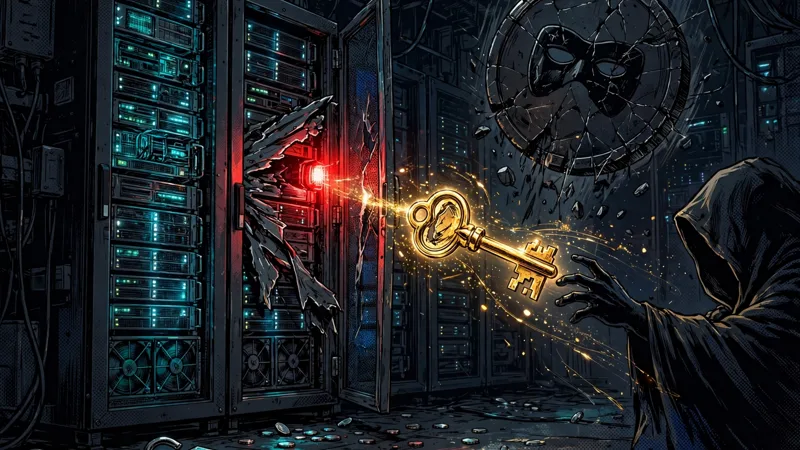
Wagyu, the crypto swap service behind the wrapped Monero token XMR1, blamed a hack of its hosting provider for the roughly $13 million theft that crashed the token by more than 99 percent on Friday, November 20, and promised to make affected users whole. PerpetualCow, a core member of Wagyu, said in a post-mortem released on November 20 that hosting provider 1984.hosting was hacked on the day of the breach, and that the attack exposed the token's deployment key.
The key was sitting in leftover logs and files on an old server that PerpetualCow said he had already deleted, according to Lookonchain's account of the post-mortem. The hosting provider kept the data even after the server was deleted, which let the attackers recover the key. PerpetualCow warned that some hosting providers retain data and logs after users delete their servers, and said he will personally compensate users affected by the incident. He also said Wagyu will relaunch at a later date.
The deleted server that kept the key
PerpetualCow said the 1984.hosting breach compromised customer data and internal server files, according to BBX, which reported the post-mortem on November 20. The XMR1 deployment key leaked because it was stored in residual logs and files on the deleted old server, BBX said.
The hosting provider has temporarily suspended all of its services because of the severe cyberattack, according to Lookonchain. Neither Lookonchain nor BBX quoted 1984.hosting directly, and the provider's own account of the breach was not in the reports checked for this article.
The post-mortem answers the question the theft left open on Friday morning, when it was unclear whether the transfers had been authorized or involved compromised credentials. CoinDesk reported at the time that whoever authorized the transfers likely had access to the deployer's main key, because Hyperliquid transfers require signatures from the account's own key rather than an ordinary trading API wallet.
What happened on Friday morning
The incident began on Friday morning when the account that deployed XMR1 transferred about 5.2 million tokens to a newly created wallet in three transfers between 04:46 and 05:16 UTC, according to blockchain intelligence firm Bitquery as reported by CryptoNews. The wallet sold about 364,000 of the tokens for roughly $13.5 million, sending XMR1 from about $494 to below $1 in roughly 35 minutes, according to CoinDesk.
The wallet then converted the proceeds into about 7,467 Ether ($ETH), CryptoNews reported, exchanging $13.22 million in USD Coin ($USDC) for the Ether through CoW Protocol after moving the funds through Hyperliquid's bridge into Arbitrum. About 4.83 million XMR1 tokens stayed in the receiving wallet during Bitquery's investigation.
The sell-off exposed how concentrated the token's supply had been. Before the transfers, the deployer account still controlled about 93 percent of XMR1's supply, according to Bitquery as reported by CryptoNews.
Who lost money
PerpetualCow said the losses are mainly concentrated among market makers who continued to buy the dumped XMR1, while exchange users were not affected, according to Lookonchain. CoinDesk had cautioned earlier on Friday that the sale proceeds do not establish the size of any customer losses.
Native Monero ($XMR) was not part of the collapse. XMR1 is a wrapped token issued by Wagyu that holders rely on the service to exchange for native Monero, and it is separate from Monero itself and from Hyperliquid's Monero futures contract, which continued trading near $482 on Friday, according to CoinDesk.
What the post-mortem leaves open
PerpetualCow gave no timeline for the compensation or for Wagyu's relaunch, and the reports checked did not say how affected users should claim their losses. The post-mortem also did not address the state of the native Monero backing that XMR1 holders depend on Wagyu's bridge to redeem.
A separate concentration risk surfaced in the same investigation. Bitquery found that the same deployer account controls 99.97 percent of ZEC1, a separate token representing Zcash ($ZEC) on Hyperliquid, according to CryptoNews. Wagyu has not commented on ZEC1.
The incident is also separate from a Wagyu data leak disclosed on October 28, which covered three months of activity and exposed records that researchers said could connect public cryptocurrency deposits with Monero receiving addresses and customer IP addresses. Wagyu said at the time that funds were unaffected, and no connection between that leak and Friday's transfers has been established, according to CoinDesk.
This article is news reporting and is not investment advice.
Sources
- PerpetualCow, Wagyu XMR1 post-mortem (primary source: the account of the 1984.hosting breach, the deployment key leaked from a deleted server's residual files, the personal compensation pledge and the planned Wagyu relaunch, as reported by Lookonchain and BBX on November 20, 2026)
- Lookonchain, XMR1 lost approximately $13 million in a hack caused by a hosting provider breach, November 20, 2026 (secondary source: the post-mortem's findings, the warning that hosting providers retain data after server deletion, losses concentrated among market makers, exchange users unaffected, and 1984.hosting suspending all services)
- BBX, PerpetualCow.hl: XMR1 augmentation system 1984.hosting was hacked, leading to key leakage, November 20, 2026 (secondary source: the 1984.hosting breach compromising customer data and internal server files, the deployment key leaked from residual logs and files on a deleted old server, and the compensation and relaunch pledges)
- CoinDesk, XMR news: Monero-linked token plunges 99% as wallet sells $13 million on Hyperliquid, November 20, 2026 (secondary source: the roughly $13.5 million sale, the fall from about $494 to about $1, about 364,000 tokens sold with about 4.83 million remaining, native Monero trading near $482, the October 28 data leak, and the caution that sale proceeds do not establish customer losses)
- CryptoNews, Hyperliquid Monero Crashes? Wagyu-Linked XMR1 Collapses, $13.2M Flows Into Ethereum, November 20, 2026 (secondary source: the three transfers between 04:46 and 05:16 UTC, the 5.2 million tokens moved, the $13.22 million in USDC converted into 7,467 Ether, the deployer's 93 percent control of XMR1 supply, and the same deployer controlling 99.97 percent of ZEC1)
MABOnChain Daily Brief
The key crypto and markets stories in one short, plain-language email. Free. Unsubscribe any time.
Prefer chat? Join us on Telegram Watch on YouTube
Keep reading

BlackRock's Bitcoin ETF Posts Record $541 Million Outflow as U.S. Funds Lose $582 Million in a Day
BlackRock's iShares Bitcoin Trust (IBIT) recorded a $541.1 million net outflow on November 19, 2026, its largest single-day withdrawal since the fund launched in January 2024, as U.S. spot Bitcoin ETFs lost $582.2 million in a day. November outflows now total $3.47 billion, the funds have turned net negative for 2026, and Bitcoin ($BTC) fell below $62,000.

Privacy Wallet Fluidkey Suspends All Services After Security Incident, Warns Users to Stay Away
Privacy wallet Fluidkey confirmed a security incident affecting users on November 19, 2026, took its website, app and all APIs offline, and said it is working with SEAL 911 to investigate and trace funds. The team has not disclosed a loss figure or how the incident happened, and warned users about impersonation attempts.

US Treasury Sanctions Southeast Asia Scam Compound Operator and Armed-Group Commanders Behind Crypto Investment Fraud
The U.S. Treasury Department sanctioned three individuals and two companies on November 19, 2026, over Southeast Asian cyber scam centers that target Americans and Europeans with virtual currency investment fraud. Cambodian operator Zhao Hui leased a scam center from the sanctioned Prince Group network and paid protection fees to its leader Chen Zhi, while two commanders of the Democratic Karen Benevolent Army were designated for guarding the compounds.

Wrapped Monero Token XMR1 Crashes 99% as Issuer-Linked Wallet Sells $13.5 Million on Hyperliquid
A wallet funded by the creator address of Wagyu's wrapped Monero token XMR1 sold about $13.5 million worth on Hyperliquid on November 20, 2026, sending the token from about $494 to about $1 in roughly 35 minutes. The proceeds were converted into about 7,467 Ether ($ETH). Whether the transfers were authorized remains unclear, and native Monero ($XMR) kept trading near $482.