

U.S. Treasury Hits Bank of America With $1.21 Billion Fine for Anti-Money Laundering Failures
Published October 14, 2026, 09:40 UTC. Based on the U.S. Treasury and FinCEN announcements of October 13, 2026, with reporting from the Associated Press, BBC and Dow Jones Newswires.
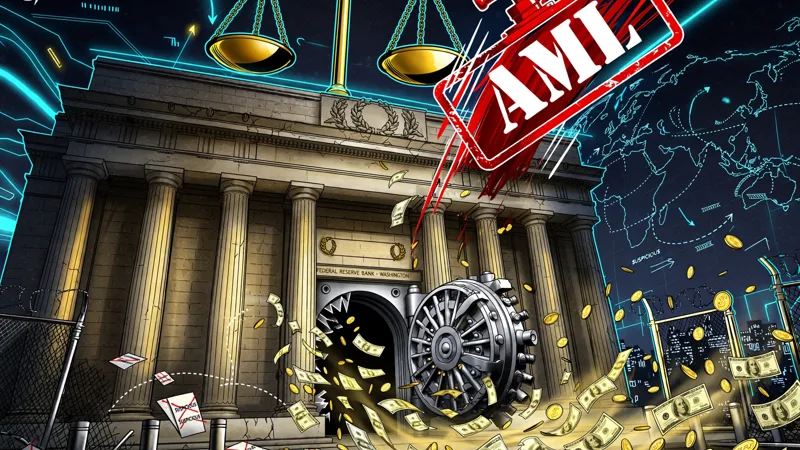
The U.S. Treasury Department announced on October 13, 2026 that it is imposing more than $1.21 billion in penalties on Bank of America, N.A. for violations of anti-money laundering and sanctions laws, the third-largest penalty in the department's history. As part of its resolution with the Treasury's Financial Crimes Enforcement Network (FinCEN), the bank admits that it willfully violated the Bank Secrecy Act and failed to implement and maintain an anti-money laundering program that met the law's minimum requirements, conduct due diligence on correspondent accounts for foreign financial institutions, and file suspicious activity reports, according to FinCEN.
The $5 billion in suspicious transactions it never reported
FinCEN assessed its $1.2 billion penalty for the bank's failure to mitigate and report priority national security risks, including Chinese money laundering networks and illicit finance along the southwest border, according to the agency. Regulators found that the bank failed to report more than $5 billion in suspicious transactions on time, with more than $1 billion of the unreported activity tied to national security risks. Investigators concluded that the bank leaned too heavily on prompts from outside parties, such as law enforcement and other financial institutions, instead of its own internal controls, effectively outsourcing much of its detection duty, according to the BBC. The failures persisted even after regulators ordered the bank to strengthen its safeguards in December 2024, according to Law Commentary.
A $750 million OCC record and an $11.6 million sanctions settlement
The Office of the Comptroller of the Currency assessed a $750 million civil money penalty for the bank's deficient and ineffective BSA/AML compliance program, the largest civil money penalty in the OCC's history, with the amount credited against FinCEN's $1.2 billion. Separately, the Treasury's Office of Foreign Assets Control (OFAC) announced an $11.6 million settlement over apparent violations of numerous sanctions programs, including on Iran, Russia, narcotics and global terrorism. The penalty is the third-largest in Treasury history, trailing only the $3.4 billion fine against Binance in 2023 and the $1.3 billion penalty against TD Bank in 2024, according to the Associated Press.
A 17-cent earnings hit and a 2% stock slide
Bank of America said its third-quarter results will include a $1.2 billion non-tax-deductible charge, reducing net income by approximately 17 cents a share, with the bank set to report third-quarter earnings on October 14, according to Dow Jones Newswires. The bank's stock fell more than 2% on October 13. Treasury Secretary Scott Bessent said that when a bank of this size fails to meet its anti-money laundering and sanctions obligations, the consequences extend far beyond its own walls and expose the U.S. financial system to illicit finance risks, and that the action sends a message that even the biggest financial institutions are not above the law.
What the fine signals for crypto's compliance era
The penalty lands as the same Treasury escalates its illicit-finance enforcement across crypto: FinCEN is the agency that sets the anti-money laundering rules crypto exchanges and stablecoin issuers live under, and earlier in October it scrapped its proposed unhosted-wallet reporting rule in a rare concession to the industry. Last week Bessent said the U.S. will probably seize $1 billion in Iran-linked crypto this week. The Bank of America action shows the other edge of that climate: a failure to detect and report suspicious activity is being treated as willful and punished with historic fines. For exchanges, stablecoin issuers and custody firms, the message is that compliance programs that lean on outside prompts instead of their own controls will not survive the current enforcement cycle.
This article is news reporting and is not investment advice.
Sources
- U.S. Department of the Treasury and Financial Crimes Enforcement Network, press release of October 13, 2026, primary source for the $1.2 billion FinCEN penalty, the $750 million OCC penalty, the $11.6 million OFAC settlement, the admitted willful Bank Secrecy Act violation and the Chinese money laundering network and southwest border findings
- Associated Press, secondary source for the third-largest Treasury penalty in history, the 2023 Binance and 2024 TD Bank comparisons and the December 2024 remediation order
- BBC, secondary source for the $5 billion in unreported suspicious transactions and the finding that the bank outsourced detection to outside prompts
- Dow Jones Newswires, secondary source for the $1.2 billion non-tax-deductible Q3 charge, the 17-cent earnings impact and the 2% stock decline
MABOnChain Daily Brief
The key crypto and markets stories in one short, plain-language email. Free. Unsubscribe any time.
Prefer chat? Join us on Telegram Watch on YouTube
Keep reading

Standard Chartered Opens Direct Bitcoin and Ether Trading to Wealthy UAE Clients
Standard Chartered said on October 14 it has launched direct bitcoin and ether trading for affluent clients in the United Arab Emirates, the first such service from an international bank in the UAE and the bank's first direct crypto trading offering to wealthy clients in any market, according to the bank and CoinDesk.

British Trader Sues BitMEX for £20 Million Over Derivatives Sold Without FCA Approval
British software engineer Lewis Barber has filed a £20 million claim in the High Court against HDR Global Trading Limited, the Seychelles-based operator of the now-defunct BitMEX crypto derivatives exchange, alleging the platform offered leveraged derivatives to UK customers without authorization from the Financial Conduct Authority, according to The Guardian and multiple reports.
DOJ's Joint Disruption Week: 28 Arrests and 3.7 Million Fake Accounts Removed in West Africa Scam Crackdown
The U.S. Justice Department announced on October 13 that a first-of-its-kind international operation called Joint Disruption Week targeted West African scam networks, producing 28 arrests in Ghana and Nigeria, the removal of more than 3.7 million accounts, pages and groups across tech platforms, and the identification of over $11 million in cryptocurrency that could potentially be frozen.