

ZebPay Warns Customers After MoEngage Breach Exposes Personal and Account Data
Published November 21, 2026, 4:45 PM PKT. Based on ZebPay's November 21, 2026 customer notice as reported by CryptoCompass on November 21, 2026, The Currency Analytics reporting on November 21, 2026, and The Economic Times reporting on MoEngage's November 20, 2026 customer email.
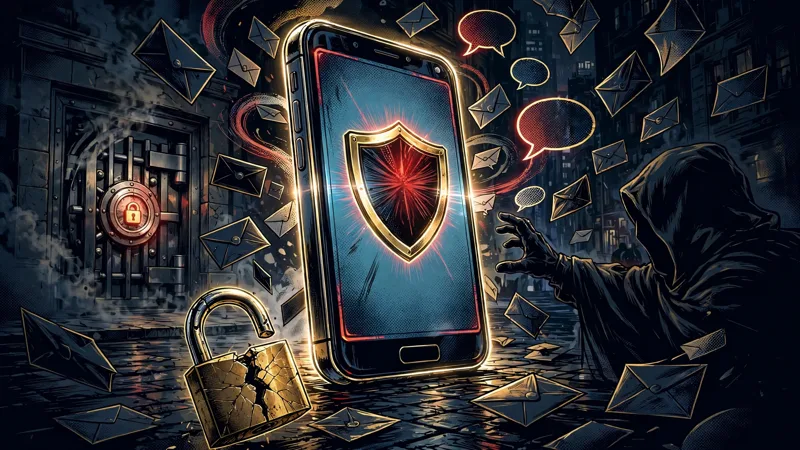
Indian crypto exchange ZebPay warned customers on November 21, 2026 that some of their personal and account activity data was taken in a security breach at its communications provider MoEngage, while the exchange says customer funds remain safe. ZebPay said MoEngage had informed it that an unauthorized party used compromised credentials to access the provider's cloud infrastructure and took information relating to some of its customers, including ZebPay users. The exchange uses MoEngage to communicate with customers and manage how it reaches them through its platform.
The notice listed the categories of information involved as basic identifiers, contact details, online and device data, and the customer's latest account activity. ZebPay gave those categories for affected users without itemizing the individual records involved, and it did not say how many of its customers were affected. MoEngage's data agreement lists email addresses, device data, app settings and event data among the types of information its clients can supply, according to CryptoCompass.
ZebPay said the incident was confined to MoEngage's environment. Its own servers, databases, wallets and trading systems were unaffected and continued to operate normally, according to the notice. The exchange said it had found no unauthorized activity in the account of the customer receiving the notice and told the recipient that their funds and crypto holdings remained secure. ZebPay said it was monitoring developments, reinforcing its security practices and had reported the incident to the appropriate authorities.
How the breach happened
The disclosure followed a November 20 customer email from MoEngage that The Economic Times reported had traced the incident to compromised credentials at one of MoEngage's own service providers. People familiar with the matter told the newspaper that some businesses were unable to access MoEngage for nearly a week, and that some customers regained access on November 19. MoEngage is a customer engagement platform used by companies to send messages across email, text and app channels, which is why a breach of its systems can expose the contact and activity data of many different companies' customers at once.
The timing adds to a difficult month for ZebPay's customers. In an earlier update on November 11, the exchange said a technical problem at a banking partner had slowed Indian rupee withdrawals. ZebPay had separately paused crypto withdrawals during platform upgrades while keeping crypto deposits open, with a warning that deposits could take longer to process, according to CryptoCompass.
The impersonation warning
ZebPay's customer warning focused on impersonation. A caller or sender may cite personal or transaction details to sound like a genuine ZebPay representative, the exchange said, and customers were warned to watch for calls, texts and emails that use personal or transaction details to impersonate ZebPay. The stolen data is exactly the kind of detail that makes a fake support call convincing: a name, a phone number, a device type and a recent transaction.
In its November 21 notice, ZebPay told users that its staff would never ask them to share a password, a one-time password, a two-factor authentication code or a wallet seed phrase. The exchange said its staff would never ask customers to install a remote-access app or transfer funds to a wallet or account. Customers who want to check a message with the exchange can open the Help section in the ZebPay app and select Support Centre to start a chat, according to its support guide. The exchange asks customers who open a support ticket to use the email address registered to their ZebPay account, and its security guidance lists a dedicated address for reporting suspicious emails. The notice directed customers in India to report suspected fraud by calling the National Cyber Crime Helpline at 1930 or filing a report through the cybercrime portal.
A familiar pattern for crypto holders
The ZebPay incident follows a pattern that has hit larger exchanges. In May 2025, US exchange Coinbase disclosed that criminals had paid overseas customer support workers to copy records for less than 1 percent of its monthly transacting users. Coinbase said the group gathered contact and account information so it could pose as the exchange and persuade customers to send it crypto. Coinbase declined a $20 million ransom demand and offered a reward of the same amount for information leading to arrests and convictions. The US exchange said its wallets and customers' login credentials were unaffected, pledged to reimburse customers who had been deceived into transferring funds to the attackers, and introduced additional identity checks for large withdrawals from flagged accounts.
In April 2026, a separate extortion attempt at Kraken followed two incidents involving improper access by people linked to its customer support operations. The exchange said limited data on about 2,000 accounts was exposed, that it had notified the affected users and that it had revoked access for the people involved. The lesson in all three cases is the same: the data taken was not enough to move funds on its own, but it was enough to make a scam call sound real, and that is where the risk now sits for ZebPay customers. MABOnChain will keep tracking any further disclosure from ZebPay or MoEngage, including how many customers were affected and whether the authorities in India open a formal investigation.
This article is news reporting and is not investment advice.
Sources
- CryptoCompass, ZebPay warns customers after MoEngage security breach, November 21, 2026 (primary source: ZebPay's November 21, 2026 notice to affected customers, reporting that an unauthorized party used compromised credentials to access MoEngage's cloud infrastructure and took information relating to some customers, including ZebPay users; data categories of basic identifiers, contact details, online and device data, and latest account activity; ZebPay's own wallets, databases and trading systems unaffected and operating normally; no unauthorized activity found in the notified customer's account; funds and crypto holdings secure; incident reported to the appropriate authorities; impersonation warning and the rule that staff never ask for passwords, one-time passwords, two-factor authentication codes or seed phrases; MoEngage's November 20 customer email and The Economic Times reporting that the incident traced to compromised credentials at one of MoEngage's service providers, with some businesses unable to access MoEngage for nearly a week and some regaining access on November 19; Coinbase May 2025 disclosure and Kraken April 2026 extortion attempt)
- The Currency Analytics, ZebPay notifies customers of MoEngage breach, November 21, 2026 (secondary source: ZebPay confirms MoEngage breach via compromised credentials; data taken included basic identifiers, contact details, online and device data, and the customer's latest account activity; ZebPay's own wallets, databases and trading systems unaffected; customers warned about impersonation; staff never ask for passwords, one-time passwords, two-factor authentication codes or seed phrases; customers in India directed to call 1930 or use the cybercrime portal)
MABOnChain Daily Brief
The key crypto and markets stories in one short, plain-language email. Free. Unsubscribe any time.
Prefer chat? Join us on Telegram Watch on YouTube
Keep reading
Binance Has Recovered Just $32 Million of the $6.4 Billion Stolen, With $2.82 Billion Frozen
Three weeks after the October 29, 2026 hack, only $32 million of the $6.4 billion stolen from Binance has actually been recovered, according to blockchain investigator SomaXBT, cited by Wu Blockchain. About $2.82 billion is frozen, $2.67 billion is still in the attackers' hands, and 18,270 Bitcoin ($BTC) taken directly from the exchange has not moved since the night of the theft.

Sonic Audit Finds S Token Supply Is 48% Higher Than Announced, at 4.7 Billion
Sonic Labs published an independent audit by Ledgity putting the total supply of its S token at 4,701,361,519, about 48% above the 3.175 billion announced at launch in December 2024. The gap traces to a 2019 Fantom issuance error that left about 1.47 billion ERC-20 FTM tokens unlocked, and Sonic plans to burn 91.7 million unallocated S tokens on December 15, 2026 and remove the manual mint function from its staking contract.
Bitcoin Breaks Its July Low and Falls to $55,500, Lowest Since September 2024, as $2.4 Billion in Crypto Positions Liquidate
Bitcoin ($BTC) fell to about $55,500 on November 21, 2026, breaking the July 1 low of $57,700 and reaching its lowest price since September 2024. CoinGlass data put 24-hour crypto liquidations at almost $2.4 billion, with $2.2 billion of it in long positions, as Ethereum ($ETH), Solana ($SOL) and Ripple ($XRP) fell with it.

Deribit Halts Trading Twice Overnight in Platform Outage at Crypto's Biggest Options Exchange
Deribit, the largest crypto options exchange, halted trading twice on November 20, 2026, first for 19 minutes and then for about two hours, with full normal limits only restored more than six hours after the first failure. The Coinbase-owned venue has not disclosed a cause, said no user funds were lost, and the outage was its second in four days.