

Unocoin Puts the Loss at $200,000 as Three Hot Wallets Fall to Compromised Backup Keys
Published November 14, 2026, 10:40 PM PKT. Based on Unocoin's security incident update of November 14, 2026 (primary source), and reporting by Bitcoin World on November 14, 2026, Crypto Briefing on November 13, 2026, KuCoin on November 13, 2026, and Blockchain Academics on November 13, 2026 (secondary sources).
Indian crypto exchange Unocoin said on November 14, 2026, that its ongoing security incident cost about $200,000, the first loss figure it has given since the breach was detected on November 6. Three hot wallets were compromised out of more than 20 the exchange maintains for operational purposes, including customer withdrawals, and the unauthorised transactions were authorised through backup keys that were generated about eight years ago, printed on paper and kept in physical storage. Unocoin said it will fund the loss from its own resources and that no customer will bear it.
The update is the fourth public statement in an incident MABOnChain has followed since November 12, 2026, when the exchange first said its servers had been compromised and its services suspended. Until now, Unocoin had said only that it could not confirm the full damage. The November 14 update changes that in three ways: it names the loss, it names the mechanism, and it discloses for the first time that customer information may have been exposed.
The $200,000 loss, and who pays for it
According to Unocoin, the total cryptocurrency loss is estimated at approximately $200,000, based on its current investigation. The exchange said the loss represents significantly less than 1% of the total cryptocurrency assets it holds on behalf of customers, and that more than 90% of customer funds are held in cold storage, a claim it has made since November 12 and which has not been independently verified.
Unocoin said it will fully fund the identified loss from its own resources, and that the loss will not be passed on to customers or deducted from their cryptocurrency balances. The exchange also said it has already succeeded in freezing a portion of the affected funds through industry relationships and coordination with relevant parties, though it did not say how much was recovered or where the frozen funds sit.
The figure is small against the scale of recent exchange incidents, but it is the first confirmed number in a case where the exchange had spent eight days saying it could not establish what had been taken. On November 13, 2026, Unocoin told users that no user funds had been lost and that their assets remained safe, even as its own notice said it was still investigating cryptocurrency losses. The November 14 update replaces that assurance with a measured loss and a commitment to cover it.
Eight-year-old paper backup keys are the weak link
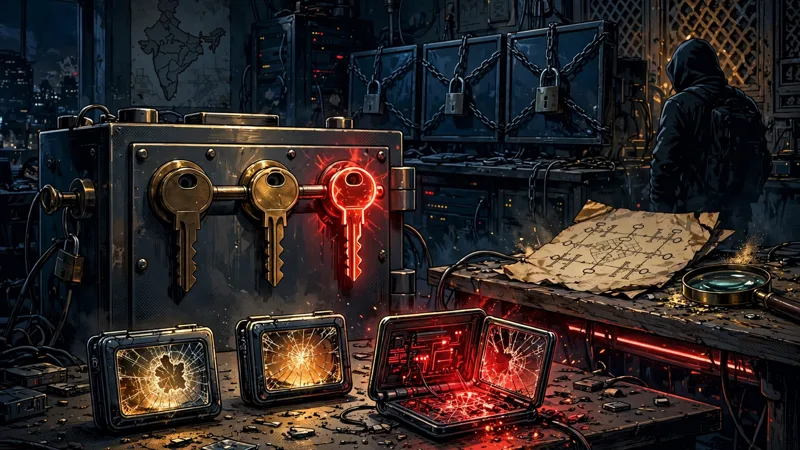
The most significant finding in the update concerns the backup keys for Unocoin's BitGo multisignature wallets. Unocoin said the encrypted backup keys were generated approximately eight years ago, printed on paper and placed in secure physical storage. Its investigation has established that these backup keys were compromised and subsequently used to authorise the unauthorised transactions.
How that happened is still unknown. Unocoin said it is continuing to investigate how keys generated and stored through that process could have been compromised, and noted that the decryption passphrase to the printed encrypted backup keys existing in its compromised infrastructure does not fully solve the puzzle. Understanding the precise method of access and the sequence of events remains, in the exchange's words, a critical part of its investigation.
The update also settles the question of BitGo's role. Unocoin said its technical analysis, supported by BitGo's investigation, indicates that BitGo's infrastructure was not compromised and that the unauthorised transactions were not signed by BitGo. The transactions were authorised using Unocoin-controlled signing keys and broadcast directly to the respective blockchain networks, independently of BitGo's platform. BitGo said in its own November 13 statement that the wallets used a 2-of-3 arrangement in which Unocoin held the user key and the backup key while BitGo held the third, that its own key was never used, and that no other BitGo clients were affected.
The sequence that made the compromise possible was already on the record. Unocoin detected suspicious activity on November 6, 2026, and asked Fireblocks to freeze its enterprise account at 11:24 UTC and BitGo at 11:29 UTC the same day. Further unauthorised activity was detected on November 9, and all services were suspended. On November 12, the exchange identified outgoing transactions from an Ethereum ($ETH) address in its BitGo wallet infrastructure that it used to fund ERC-20 tokens. The November 13 update said the freeze had functioned as intended and that the transactions had been signed and broadcast outside BitGo's platform, with a backup mechanism suspected of being exploited. The November 14 update confirms that suspicion and identifies the paper backup keys as the compromised material.
Customer data was exposed, but KYC documents were not
Alongside the loss figure, Unocoin disclosed that a significant portion of its infrastructure should be treated as potentially compromised, and that the potentially exposed information includes registered email addresses, residential addresses, encrypted account passwords, KYC-related information and account balances across various cryptocurrencies and tokens.
At this stage, the exchange said, it has not found evidence that customer KYC documents were accessed, though the investigation is ongoing and it is continuing to examine the possibility of unauthorised access to or extraction of information. Unocoin warned customers to be vigilant about targeted phishing attempts that may use personal information to make fraudulent communications appear genuine, and said it will never ask customers to disclose passwords, one-time codes, private keys or wallet recovery phrases.
What comes next
Services remain suspended, with no restoration date announced. Unocoin said on November 12 that it is rebuilding its entire server infrastructure from scratch rather than restoring the existing environment, and estimated the exercise would take approximately 4 to 5 working days, followed by comprehensive security audits and validation. The November 14 update repeats those priorities: completing the forensic investigation into how the backup keys were compromised, finishing the infrastructure rebuild, and conducting audits in parallel before going live again.
Unocoin also acknowledged that customers expected more frequent updates, saying the complexity of the incident required its teams to secure remaining holdings, investigate the compromise, coordinate with custody partners and establish the extent of the data exposure at the same time, which affected its ability to communicate every development in real time. It said it will publish a further update covering any other significant findings.
This article is news reporting and is not investment advice.
Sources
- Unocoin, Security Incident Update, November 14, 2026 (primary source: loss estimated at approximately $200,000; three hot wallets compromised out of more than 20; Unocoin to fund the loss from its own resources; a portion of affected funds already frozen; loss is significantly less than 1% of customer crypto assets; customer data potentially exposed includes email addresses, residential addresses, encrypted passwords, KYC-related information and account balances; no evidence KYC documents were accessed; backup keys generated about eight years ago, printed on paper and placed in secure physical storage, now confirmed compromised; BitGo infrastructure not compromised and transactions not signed by BitGo; services remain suspended)
- Bitcoin World, BitGo: Unocoin's Own Backup Keys Signed Suspicious Transfers, November 14, 2026 (secondary source: BitGo said the suspicious transfers were signed with two keys held by Unocoin and broadcast on-chain without the custodian's involvement, per a November 13 statement; Unocoin's enterprise account was frozen at its own request on November 6 and the freeze operated as intended; no confirmed loss figure at that time)
- Crypto Briefing, Unocoin claims over 90% of assets in cold storage amid ongoing investigation, November 13, 2026 (secondary source: BitGo said its systems were not breached; the 2-of-3 wallet gave Unocoin the user key and backup key while BitGo held the third; BitGo's investigation concluded on November 13; no other clients affected; Unocoin said there were no confirmed losses so far)
- KuCoin, BitGo Confirms No Breach in Unocoin Wallet Incident, November 13, 2026 (secondary source: BitGo said its own key in the 2-of-3 setup was never used; Unocoin's BitGo account was frozen on November 6, 2026; neither company had provided a confirmed loss figure)
- Blockchain Academics, BitGo Says Unocoin Transfers Were Signed With Two Unocoin Keys, November 13, 2026 (secondary source: two of three keys signed the disputed transfers and both belonged to Unocoin; Unocoin told users on November 13 that no user funds had been lost while its own notice said losses were still under investigation; an Arkham snapshot listed 80,986 attributed Unocoin addresses with no priced token holdings)
MABOnChain Daily Brief
The key crypto and markets stories in one short, plain-language email. Free. Unsubscribe any time.
Prefer chat? Join us on Telegram Watch on YouTube
Keep reading

Uniswap ($UNI) Slides 14% as Selloff Hits DeFi, Even as Tokenized Stock Trading Tops $20 Billion
Uniswap ($UNI) fell about 14% to $4.94 on November 14, 2026, down 28% in a week, as a market-wide selloff dragged Bitcoin ($BTC) below $67,000 and hit DeFi tokens hardest. No Uniswap-specific trigger was confirmed, and the slide came the same week the protocol's tokenized stock trading passed $20 billion and its v4 equity markets went live on Monad.

Kava ($KAVA) Crashes 40% as Kava Lend Incident Halts Exchange Withdrawals
Kava ($KAVA) fell more than 40% on November 14, 2026 after the Kava team flagged abnormal activity in a dApp in its ecosystem and later said the incident was isolated to its Kava Lend lending protocol and was not an infinite mint. Upbit, Bithumb and Coinone suspended KAVA deposits and withdrawals, Upbit put the token on its delisting watchlist, and Kava paused Axelar bridge withdrawals as a precaution while it investigates.

Coinbase India Rupee Withdrawals Still Halted After Five Days as Banking Partner Outage Drags On
Coinbase India confirmed on November 14, 2026 that rupee withdrawals remain unavailable five days after its status page first flagged an outage at a banking partner. Deposits, UPI payments and bank linking still work, the exchange says funds are safe, and no restoration time has been given, while Unocoin and ZebPay face their own India withdrawal problems.

MEGA Cuts 20% of Staff as MegaETH Parent Pivots Toward AI Products
MEGA, the organization behind Ethereum layer-2 network MegaETH, cut about 20% of its workforce after months of restructuring, co-founder Shuyao Kong said on November 13, 2026. The cuts hit staff who built the blockchain, wallet and ecosystem, days after the foundation rebranded as MEGA and committed $30 million from its treasury to new products starting with an AI inference marketplace due in December.