

Ukraine Sanctions Crypto Exchanges and A7 Shadow Bank Network Over Russian Sanctions Evasion
Published October 12, 2026, 17:45 PKT. Based on the Office of the President of Ukraine’s October 11 announcements and reporting by hromadske and Rubryka.
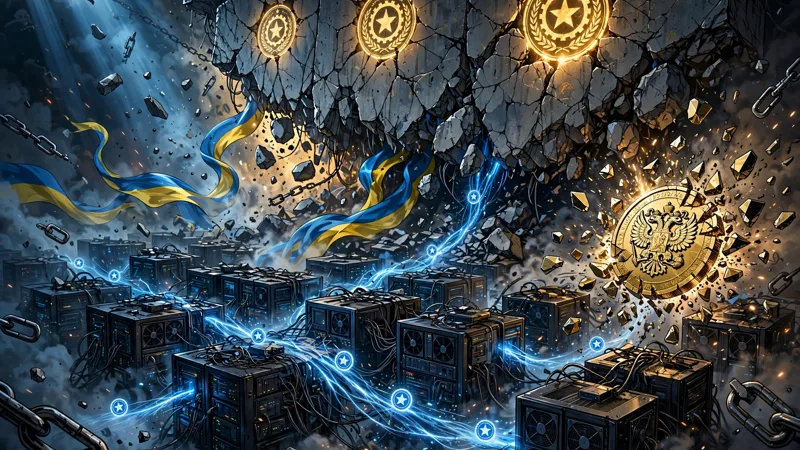
Ukrainian President Volodymyr Zelenskyy has signed three decrees implementing decisions of the National Security and Defense Council (NSDC) that took effect on October 11, 2026, targeting Russian missile production, sanctions evasion and Russian activity in occupied territories. The financial package covers 28 individuals and 27 legal entities that Ukrainian authorities say helped Russia circumvent financial restrictions, including operators of cryptocurrency exchanges, crypto exchange services, and executives and owners of companies in the A7 shadow banking network. The presidential office announced the measures on October 11.
The 28-plus-27 sanctions package
According to the presidential office, the financial package covers cryptocurrency exchange operators, cryptocurrency exchange services and their managers and owners, alongside executives and owners of A7 network companies. The office said the A7 network publicly offers tools for circumventing financial restrictions, and noted that the United States had previously imposed sanctions on the network. The decrees implementing the NSDC decisions are published on the official presidential website under numbers 1035/2026, 1036/2026 and 1037/2026, according to reporting by Rubryka. A7, a firm already on the U.S. sanctions list, released a ruble-pegged stablecoin in February aimed at cross-border transactions, Decrypt reported.
Missiles and occupied territories round out the three packages
A second package targets 70 employees of Russian defense and chemical companies involved in producing Iskander-M ballistic missiles and Zircon missiles, including engineers, production managers and other key personnel at facilities such as the Votkinsk Plant, hromadske reported. A third package imposes restrictions on 10 individuals, 21 companies and two vessels accused of supporting Russian activities in occupied Ukrainian territories, from financing the war and plundering natural resources to spreading propaganda, the presidential office said. “Everyone who makes missiles used to strike Ukrainian cities must understand: responsibility is personal,” presidential sanctions adviser Vladyslav Vlasiuk said, according to hromadske.
A tightening noose on crypto sanctions evasion
Ukraine’s move lands days after the United Kingdom sanctioned five more crypto platforms, including Cryptomus and TokenSpot, over alleged Russian sanctions evasion on October 8, a story MABOnChain reported at the time. The back-to-back actions point to a coordinated tightening: Kyiv has said it intends to work with international partners to extend the new restrictions beyond its own sanctions list. The financial package also marks one of Kyiv’s largest crypto-focused sanctions actions since the war began, with the crypto exchange operators and A7-linked executives named alongside the missile supply-chain staff.
This article is news reporting and is not investment advice.
Sources
- Office of the President of Ukraine, primary source for the October 11 announcements, the three decrees implementing NSDC decisions (No. 1035/2026, 1036/2026 and 1037/2026), the 28 individuals and 27 legal entities in the financial package, the targeting of crypto exchange operators, crypto exchange services and A7 shadow banking network executives, and the 70 missile engineers and 10 individuals, 21 companies and 2 vessels in the other packages
- hromadske, secondary source for the Iskander-M and Zircon missile details, the Votkinsk Plant facility, and the Vladyslav Vlasiuk quote
- Rubryka, secondary source for the decree numbers and the package breakdown
- tradersunion.com and antikor.info, secondary sources corroborating the sanctions details and the A7 network’s public sanctions-evasion tools
MABOnChain Daily Brief
The key crypto and markets stories in one short, plain-language email. Free. Unsubscribe any time.
Prefer chat? Join us on Telegram
Keep reading

Kraken Clears Dubai's Final Hurdle, Wins Full VARA License for Dirham Crypto Trading
Payward, Kraken’s parent company, announced on October 12, 2026 that Dubai’s Virtual Assets Regulatory Authority (VARA) has granted it Full Market Approval, the final stage of the emirate’s licensing process. The license lets local entity Payward FZCO onboard retail, professional and institutional clients in the UAE within weeks, offering spot and margin trading with UAE dirham-denominated pairs, direct AED deposits and withdrawals, on-chain staking, tokenized equities through xStocks, and Kraken Prime for institutions.

Bybit Launches Real U.S. Stock Trading: 1,000+ Stocks and ETFs Funded With USDC
Bybit announced on October 12, 2026 that eligible users can now trade more than 1,000 U.S.-listed stocks and ETFs, including Apple, Nvidia, Tesla, Micron and the Invesco QQQ, using USDC from their Bybit accounts. Orders are executed by Alpaca, a U.S. self-clearing broker-dealer, through Infra Capital Limited (regulated by Mauritius’s FSC).

FSB Warns G20 of Stablecoin Run Risks and AI Threats Ahead of October 15 Meeting
FSB Chair Andrew Bailey told G20 finance ministers and central bank governors on October 12, 2026 that cross-border mechanisms for stablecoin oversight and crisis management ‘remain immature or are not yet developed,’ with only 11 of 28 surveyed jurisdictions having finalized stablecoin frameworks.