

TRON, Tether and Chainalysis Launch Digital Crime Task Force to Hunt AI-Powered Crypto Scams
Published November 12, 2026, 7:15 PM PKT. Based on the joint announcement by TRON, Tether and Chainalysis shared with The Block on November 12, 2026 (primary source) and reporting by Cointelegraph, crypto.news and Unchained the same day (secondary sources). The task force has not announced any specific new asset freezes or enforcement cases yet.
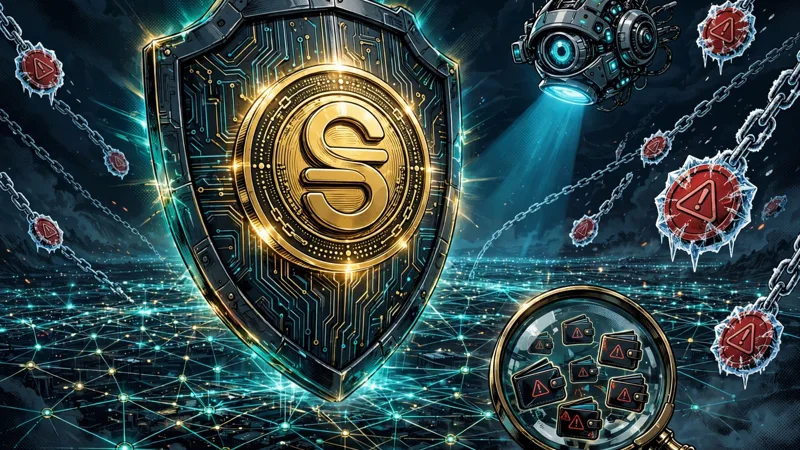
TRON, Tether and Chainalysis have launched a joint Digital Crime Task Force to hunt down illicit activity involving Tether's USDT ($USDT) stablecoin on the TRON ($TRX) blockchain, and to freeze suspect funds before criminals can move them.
The three companies announced the initiative, called the Digital Crime Task Force, on November 12, 2026, in a statement shared with The Block. The group will use Chainalysis investigators, blockchain data and AI-powered tools to flag suspicious wallets, turn what it finds into leads for law enforcement, and coordinate asset freezes, according to the announcement. The aim, the partners said, is to shorten the gap between detecting a threat and taking enforcement action, so funds are stopped before investigators lose the trail.
"Criminals are using AI to move faster than ever, and waiting for a victim to report a crime is no longer good enough," Tether chief executive Paolo Ardoino said in the announcement. TRON founder Justin Sun said millions of people rely on USDT on TRON to support their families and run their businesses, and that protection for those users has to grow as digital finance reaches more people.
A successor to the T3 unit that folded in August
The new task force replaces the T3 Financial Crime Unit, an earlier alliance of TRON, Tether and blockchain analytics firm TRM Labs that was set up in September 2024. Bloomberg reported on November 4, 2026 that the T3 unit was disbanded in late August after slow response times and a lack of coordination among its members.
Chainalysis takes TRM Labs' place in the new arrangement, bringing its investigators, blockchain data and AI-powered investigative tools. TRON supplies the network where much of the world's USDT circulates, and Tether, as the stablecoin's issuer, has the power to freeze tokens at identified addresses. The partners said the task force will hunt proactively for suspected criminal activity rather than waiting for victims to come forward.
The task force plans to focus on investment and romance scams, exchange hacks, terrorist financing, North Korean cyberattacks, cartel money laundering and drug trafficking, according to the announcement and Unchained's reporting. Tether says it has already frozen more than $7 billion linked to illicit activity, working with more than 360 law enforcement agencies across 73 countries.
AI scams pay 4.5 times more, Chainalysis says
The launch is framed around a sharp rise in AI-driven fraud. Chainalysis said in the announcement that scams with links to AI vendors generated 4.5 times more revenue per operation in 2025 than scams without such links. In its 2026 Crypto Crime Report, the firm put the average haul at $3.2 million per AI-linked operation, against $719,000 for other scams, and said impersonation scams surged more than 1,400% year over year.
That surge is the backdrop for the task force's method. Instead of reacting to victim reports, the group plans to scan the TRON network for suspicious USDT flows itself, using Chainalysis data and AI tools to spot patterns such as impersonation rings and investment fraud before the money disperses across wallets and exchanges. The partners said faster intelligence sharing with police is the point: a freeze that lands hours earlier can be the difference between recovered funds and funds gone for good.
Freezes before the money moves
The task force has not announced any specific new asset freezes or enforcement cases completed since its launch, and the announcement named no targets. What it did set out is a working model: Chainalysis flags the wallets, Tether freezes the USDT, and law enforcement gets the leads while the trail is still warm.
The model will be tested against a crime wave that has already hit the industry hard this year. The Block noted that the announcement came in the same week that crosschain protocol Across suffered a domain takeover and blockchain infrastructure provider Chainstack disclosed an AI-powered breach that exposed customer names, emails and password hashes. The $6.36 billion Binance hack in late October, which the FBI attributed to North Korean hackers, is the largest single case in a year that TRM Labs says has already seen a record $8.7 billion stolen across 325 incidents.
What to watch next
Three things will show whether the task force is more than a press release. The first is a first freeze: the partners have not said when the group will announce its first enforcement action, and the T3 unit it replaces was criticized for slow responses. The second is scope: the announcement focuses on USDT on TRON, so it remains to be seen whether the group extends to other chains or stablecoins. The third is transparency: T3 published regular tallies of frozen funds, and the new task force will be judged on whether it reports its own numbers, including how much it freezes and how quickly.
Sources
- The Block, Tron, Tether and Chainalysis form new alliance to tackle AI-powered crypto crime, November 12, 2026 (primary source: joint statement shared with The Block announcing the Digital Crime Task Force; AI-enabled scams 4.5 times more profitable in 2025; impersonation scams up more than 1,400%; Tether has frozen more than $7 billion working with more than 360 law enforcement agencies in 73 countries; T3 Financial Crime Unit dissolved after slow response times and poor coordination)
- Cointelegraph, via TradingView News, Tron and Tether bring in Chainalysis after T3 crime unit folds, November 12, 2026 (secondary source: task force announced Thursday to identify and disrupt illicit USDT activity on the TRON blockchain; T3 disbanded in late August per Bloomberg November 4 report; Paolo Ardoino quote)
- crypto.news, Tron, Tether and Chainalysis launch task force to fight AI crypto scams, November 12, 2026 (secondary source: task force targets suspicious USDT activity on TRON, plans faster asset freezes with law enforcement; focus includes investment and romance scams, hacks, terrorist financing and North Korean thefts; no specific new freezes announced yet)
- Unchained, Tether, TRON and Chainalysis Launch a Task Force to Freeze Illicit USDT Before It Moves, November 12, 2026 (secondary source: task force to hunt scams, hacks and laundering involving USDT on TRON and pass leads to police; AI-linked scams averaged $3.2 million per operation versus $719,000 for others in 2025; focus also covers drug trafficking, cartels and child sexual abuse material)
This article is news reporting and is not investment advice.
MABOnChain Daily Brief
The key crypto and markets stories in one short, plain-language email. Free. Unsubscribe any time.
Prefer chat? Join us on Telegram Watch on YouTube
Keep reading

CFTC Approves tZERO to Run a Regulated Crypto Derivatives Exchange Ahead of $350 Million Merger
The U.S. Commodity Futures Trading Commission approved the registration of tZERO DCM, LLC as a designated contract market, authorizing tZERO to operate a regulated derivatives exchange, completing the pair with the October 16 registration of its clearinghouse arm tZERO DCO, LLC. The two approvals satisfy the first earn-out milestone in tZERO's proposed $350 million merger with FG Imperii Acquisition Corp., but the company has not named its first contracts or a date for trading to begin.
Chainstack Says an AI-Driven Breach Exposed Customer Data and Password Hashes
Blockchain infrastructure provider Chainstack said an attacker used the AI-driven ARTEX framework to break into its systems between October 26 and October 31, 2026, entering through a test Grafana instance left with default administrator credentials, reaching production and accessing a customer account database holding organization names, account holder names, member email addresses and password hashes. Chainstack is treating node credentials as exposed and has told all customers to change passwords, rotate node credentials and regenerate API keys.
South Korea Will Let Exchanges Freeze Withdrawals on a Suspected Hack, FSC Says
South Korea's Financial Services Commission said on November 12, 2026 that it will issue a no-action letter letting cryptocurrency exchanges suspend deposits and withdrawals when a hack is only suspected, not confirmed, closing a legal gray zone exposed by GOPAX's November 6 shutdown and a hot-wallet breach at Prabang. Exchanges must also run round-the-clock monitoring, keep hot-wallet balances minimal and hold more than 95% of customer assets in cold storage.
India's Oldest Crypto Exchange Unocoin Goes Dark as 81,000 Tracked Wallets Show Zero Balances
Unocoin reported unauthorized access to its servers on November 9, 2026 and disabled user logins, and its website was still returning a 504 error three days later, while Arkham Intelligence data flagged by Onchain Lens showed zero holdings across about 81,000 addresses attributed to the exchange. Unocoin says no customer funds were lost, but it has given no timeline for restoring service and has not addressed the wallet figures.