

Trezor Says Shipping Partner Breach Exposed Data From About 27,000 Orders
Published November 17, 2026, 6:45 AM PKT. Based on Trezor's disclosure on its official blog (primary source) and corroborating reporting by The Block, CoinMarketCap and crypto.news (secondary sources).
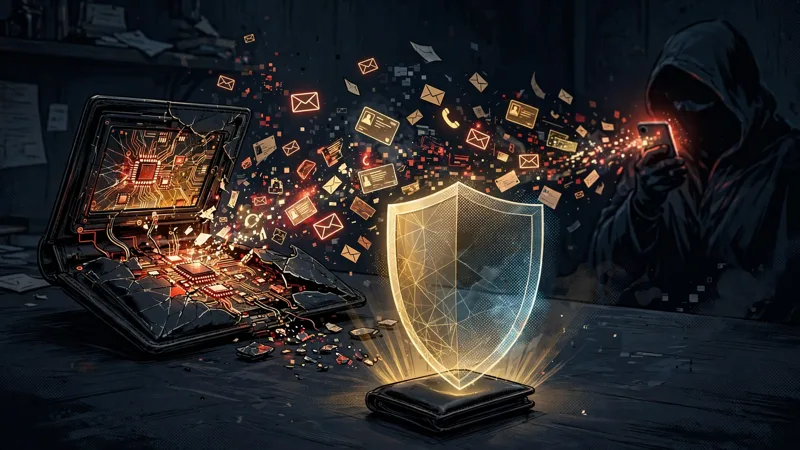
Hardware wallet maker Trezor said on November 16, 2026 that a breach at Skladon, one of its shipping partners, exposed personal data tied to about 27,000 customer orders, and it warned affected buyers to expect scam calls, texts and emails that quote their real order details.
Skladon told Trezor on November 15 that an attacker had gained unauthorized access to systems holding Trezor customer shipping data. The breach itself took place on November 7, according to Trezor. The company said it believes the attacker exported data for approximately 27,000 orders placed between August 9 and November 7, 2026, and that its investigation is still going on.
The exposed records hold full names, phone numbers, delivery addresses and email addresses, plus the date of each order and the products bought and prices paid. Trezor said its own systems were not compromised and customers' devices are secure. No wallet backups, PINs or passphrases were involved, the company said, because neither Trezor nor Skladon ever holds them.
Who was affected, and what scammers are already doing
Anyone who received Trezor's email about the incident and placed an order between August 9 and November 7, 2026 had their order data exposed, according to the company. A small number of customers who ordered between August 9 and August 14 may also be affected, but Trezor cannot email them because their details had already been anonymized in its systems under its 90-day data policy.
The incident is not limited to one region. Skladon delivers Trezor orders to many countries, Trezor said, and anyone who got the email and ordered in the window is affected. Customers in the United States are not affected, because Skladon does not ship to the US, according to Trezor.
The risk is not theoretical. Some affected customers have already reported scam calls, Trezor said, and its notice warns that scammers may quote real order details, including what a customer bought and what they paid, to make a message look genuine. Trezor warned customers to treat any unexpected call, message or letter about their order as suspicious, and said the company will never call a customer or ask for their wallet backup. Customers should contact support only through the official website, never through a link, QR code or number in a message, the company said. Because the data includes home addresses and proof that the recipient owns crypto, Trezor also warned about risks to physical security, and said anyone who receives a threat or feels unsafe should contact local police first.
What Trezor is changing after a third partner breach
Trezor is rolling out Anonymous Pickup, a way to collect an order from a parcel locker or pickup point instead of having it delivered to a home address. The company said it has been building the option since early 2026, and it is now available in 18 European countries, so a customer's name and home address never reach Trezor at all. Trezor said it is working to launch the option in the US as soon as possible.
The company is also cutting how long it keeps order data, from 90 days to 45 days, with a goal of reducing it further, and it said it will require its shipping partners to follow the same policy. Trezor said it has informed the data protection authority about the incident, and that it is reviewing its relationships with third-party partners and the security requirements it places on them.
Trezor acknowledged the pattern in its own notice. The company wrote that it knows this is not the first time customer contact details and addresses have been exposed in an incident involving one of its partners, and apologized, especially to customers affected again. In August 2026, a breach at ShipMonk, another Trezor shipping partner, exposed personal information tied to about 13,700 customers across seven countries, according to The Block. An earlier incident this year involved Brevo, a communications provider. The Skladon breach is the third partner incident of the year to put Trezor customer data in an attacker's hands.
The Skladon breach is separate from the Safe 5 implant saga MABOnChain reported in October and November, in which Trezor confirmed spy implants in three Safe 5 devices sold through a reseller and cut its reseller network by about 80 percent. That incident involved tampered hardware, not a data leak, and no funds were reported stolen.
What happens next
The investigation is still going on, and Trezor said it will update its post as it learns more. The open questions are whether the exported data surfaces for sale or in phishing campaigns, whether any of the scam calls already reported turn into confirmed thefts, and when anonymous pickup reaches the US. For now, the company's advice to anyone who ordered a Trezor device between August 9 and November 7 is simple: expect the calls, do not trust them, and never share a wallet backup with anyone, for any reason.
This article is news reporting and is not investment advice.
Sources
- Trezor, Data breach at Trezor shipping partner, Skladon, November 16, 2026 (primary source: Skladon notified Trezor on November 15 of unauthorized access from a breach on November 7; approximately 27,000 orders placed between August 9 and November 7, 2026 believed exported; exposed data includes full names, phone numbers, delivery addresses, email addresses and order date and details; Trezor systems not compromised and devices secure; no wallet backups, PINs or passphrases involved; customers who ordered August 9 to 14 may be affected but cannot be emailed because their details were anonymized; scam calls already reported; physical security warning; Anonymous Pickup now in 18 European countries with a US launch planned; order data retention cut from 90 days to 45 days; data protection authority informed; partner relationships under review)
- The Block, Trezor hit by another shipping partner data leak, affecting 27,000 Skladon orders, November 16, 2026 (secondary source: corroborates the Skladon breach, the November 7 intrusion, the August 9 to November 7 order window and the data categories; the August ShipMonk breach exposed personal information on approximately 13,700 customers across seven countries)
- CoinMarketCap, Trezor Partner Breach Exposes Data From About 27,000 Orders, November 16, 2026 (secondary source: corroborates the 27,000-order figure and the August 9 to November 7 window; Skladon does not ship to the US, so American buyers were not affected; anonymous pickup in 18 European countries; data retention cut from 90 days to 45 days; the August ShipMonk breach affected nearly 14,000 customers)
- crypto.news, Trezor breach exposes 27,000 orders as scam calls begin, November 16, 2026 (secondary source: corroborates the November 7 breach, the November 15 notification and the November 16 disclosure; some affected customers cannot be emailed because their contact information had already been anonymized; scammers may quote real order details to look genuine)
MABOnChain Daily Brief
The key crypto and markets stories in one short, plain-language email. Free. Unsubscribe any time.
Prefer chat? Join us on Telegram Watch on YouTube
Keep reading

Backpack Wins CFTC Approval to Run the First Blockchain-Based Derivatives Exchange in the U.S.
Backpack said on November 16, 2026 that the U.S. Commodity Futures Trading Commission approved its U.S. derivatives exchange and clearing operations, a Designated Contract Market designation for TLD Markets, Inc. on November 16 and a Derivatives Clearing Organization registration for TLD Clearing, Inc. on November 13. U.S. users will be able to trade leveraged crypto perpetual futures around the clock with fiat or crypto collateral, cross-margin and access to Backpack's global liquidity in one unified order book. No launch date was given. CFTC Chair Michael S. Selig called the approvals a milestone for blockchain-built market infrastructure, and Backpack, which serves users in more than 150 countries with over $450 billion in cumulative trading volume, describes the approval as the first of its kind in the United States.
Former Robinhood Engineer Pleads Guilty to Insider Trading on Confidential Crypto Listings
Former Robinhood software engineer Huaisong Xiang, 30, pleaded guilty to wire fraud in Manhattan federal court on November 16, 2026, admitting he used confidential information about upcoming Robinhood Crypto listings to trade perpetual futures on Hyperliquid. Prosecutors say he profited $125,523 between 2025 and 2026 by buying perpetuals tied to tokens including Popcat ($POPCAT), Cat in a Dogs World ($MEW), Moo Deng ($MOODENG), Ondo ($ONDO) and Render ($RENDER) before Robinhood announced the listings. He agreed to forfeit the profits, faces up to 20 years in prison, and is due to be sentenced on February 25, 2027. A second engineer, Hefu Chai, was charged in September and his case is still pending.

Four Senators Warn the SEC Its Tokenized Stock Exemption Has Illicit Finance Gaps
Four Democratic senators wrote to SEC Chair Paul Atkins on November 16, 2026 warning that the SEC's Innovation Exemption for tokenized stocks has illicit finance gaps. The five-year exemption, issued September 17, 2026, lets tokenized securities venues trade tokenized U.S. stocks without registering as exchanges, but the senators say it does not specify how know-your-customer and anti-money-laundering rules apply, or whether platforms must restrict who receives the tokens. They also raised retail pricing protections, said issuers should be able to opt out of having their stocks tokenized, and asked the SEC to make any changes through transparent rulemaking. The SEC declined to comment.
Solana Urges All Validators to Patch NoisyTCP Linux Flaw That Can Crash Servers Remotely
Anza, the developer of Solana's Agave validator client, urged mainnet operators on November 16, 2026 to act urgently on NoisyTCP, a Linux kernel flaw tracked as CVE-2026-99288 that lets a remote attacker crash a server before login. The bug sits in the kernel's TCP code, not in Agave, and it affects all staked and unstaked Agave and Firedancer nodes. Operators should install a patched kernel when their distribution ships one, or temporarily disable SYN cookies as a stopgap that needs no validator restart. Red Hat rates the flaw Important with a preliminary CVSS score of 7.5, and no validator crashes or network disruption had been reported.