

Germany's Bundestag Votes to Let Customs Seize Crypto Over 100,000 Euros Without a Criminal Case

Published November 16, 2026, 11:45 PM PKT. Based on the German federal government's page on the Customs Financial Justice Act (primary source) and Decrypt, ChainAIWire, CryptoNews and Coindaro coverage of November 15 and 16, 2026 (secondary sources).
Germany's Bundestag passed a law on November 12, 2026, that lets customs officers seize cryptocurrency and other assets worth more than 100,000 euros when they have justified doubts about the assets' lawful origin, even when no criminal investigation is open. The Customs Financial Justice Act, known in German as the Zollfinanzgerechtigkeitsgesetz, explicitly covers crypto assets, and it shifts the burden onto owners to show their holdings were lawfully obtained.
The law is not in force yet. It still needs approval from the Bundesrat, the upper house that represents Germany's states, and the government plans for it to take effect on January 1, 2027.
The 100,000 euro rule
The new power targets "significant" assets, which the government's bill generally defines as worth more than 100,000 euros, about $111,000, according to Decrypt, reporting on the bill. For items that can be registered, such as real estate and vehicles, the threshold drops to 50,000 euros, according to CryptoNews.
The instrument is called a "suspicious wealth order." Customs can secure an asset for up to 30 days while it investigates the origin, and a finance court can extend the hold, according to ChainAIWire, reporting on the bill text. Finance Minister Lars Klingbeil has said customs could hold assets for up to 180 days without a conviction while owners show they were obtained legally, according to Decrypt.
Permanent confiscation is a separate step and requires a court ruling. Following an amendment by the governing coalition, that decision will be made by a panel of finance court judges rather than a single judge, according to Decrypt.
The government's reasoning, set out in the bill's explanatory notes, is that owners of such assets are usually able to explain where they came from, while the state struggles to prove an illegal origin. "Almost every law-abiding citizen will be able to explain where these assets came from," the notes say, as summarized by the Bundestag's news service and reported by Decrypt.
What customs can now do
The law gives customs a broader toolkit than seizure alone. Customs will be able to monitor cross-border digital payment routes more closely and secure crypto assets, according to the federal government's page on the law. The Financial Intelligence Unit at customs is strengthened, data sharing between the federal government and the states is expanded, and customs gains a legal basis to use modern technologies such as artificial intelligence, including matching biometric data and operating drones, according to the government.
The law also reorganizes the customs administration. The General Customs Directorate will split into two branches, "Customs and Taxes" and "Security and Enforcement," and the Customs Criminal Office and the Central Office for Sanctions Enforcement will be folded into it, according to the government.
"With this, we are sending a clear signal to criminals: we are getting tougher," Finance Minister Lars Klingbeil said, according to the government. "The Porsche and the Rolex are then gone for now," he added, according to the Berliner Zeitung, quoted by Decrypt.
The vote and the critics
The Bundestag's finance committee backed the bill on November 11, and the full chamber passed it on November 12 with votes from the governing CDU/CSU and SPD as well as the far-right AfD, according to Decrypt. The Left Party voted against it, and the Greens abstained.
Critics say the law will catch small targets rather than the networks it is aimed at. The Greens said Germany's money laundering problem is estimated at 100 billion euros, and that the government's expectation of only 308 million euros in additional revenue showed the gap between its ambitions and the law, according to Decrypt. The Left Party said the confiscation process was "built for the cash courier, not the banker."
The government expects about 308 million euros, about $342 million, in extra revenue, according to Decrypt. That is the government's expectation, not money already collected.
Germany and Bitcoin seizures
Germany has seized large amounts of crypto before, and has been quick to sell it. In 2024, authorities in the state of Saxony began selling the nearly 50,000 Bitcoin ($BTC) they had seized from operators of the movie piracy website Movie2K, moving hundreds of millions of dollars' worth at a time, according to Decrypt. Blockchain analytics firm Arkham later said authorities had failed to seize a further 45,000 Bitcoin ($BTC) linked to the site.
German authorities have also gone after laundering infrastructure. Last year, they joined Swiss police in shutting down Cryptomixer, a mixing service that had laundered more than $1.4 billion in Bitcoin ($BTC) since 2016, according to Decrypt. Separately, the finance ministry has drafted a 25 percent tax on crypto gains from 2027.
The new law would give customs a way to seize crypto of unclear origin without first having to tie it to a specific crime, according to Decrypt.
What happens next
The next step is the Bundesrat. The chamber's next plenary session is on November 20, and its agenda, last updated on November 13, does not list the customs law, though agendas can still be supplemented, according to Coindaro. No date for a Bundesrat vote has been announced.
The law is part of the government's action plan against organized crime, adopted on February 25, 2026, according to the federal government. The bill also partly carries out recommendations from the Financial Action Task Force, the international anti-money laundering body, and the Egmont Group of financial intelligence units, according to Coindaro.
Until the Bundesrat acts, the facts are narrow: the lower house has passed the law, the threshold is 100,000 euros, the maximum hold without a conviction is 180 days, and permanent confiscation still needs a court ruling.
This article is news reporting and is not investment advice.
Sources
- German federal government, Zollfinanzgerechtigkeitsgesetz, November 2026 (primary source: the federal cabinet adopted the Customs Financial Justice Act on August 12, 2026, and the Bundestag passed it on November 12; customs will be able to secure assets more easily where there are justified doubts about lawful origin under a "suspicious wealth order"; customs will be able to better monitor cross-border digital payment routes and secure crypto assets; the Financial Intelligence Unit is strengthened; customs gains a legal basis to use artificial intelligence; the law implements central parts of the action plan against organized crime adopted in February 2026; Finance Minister Lars Klingbeil quote)
- Decrypt, German Lawmakers Back Customs Powers to Seize Crypto of 'Unclear Origin', November 16, 2026 (secondary source: the powers target "significant" assets, generally those worth more than 100,000 euros, about $111,000; customs could hold assets for up to 180 days without a conviction; permanent confiscation requires a court ruling by a panel of finance court judges; the government expects about 308 million euros in extra revenue; the finance committee backed the bill on November 11 with CDU/CSU, SPD and AfD votes, The Left against, the Greens abstaining; the Greens put money laundering at 100 billion euros; Saxony's 2024 sale of nearly 50,000 Bitcoin ($BTC) seized from Movie2K operators and Arkham's claim of a further 45,000 Bitcoin ($BTC) not seized; the Cryptomixer shutdown and the drafted 25 percent crypto gains tax from 2027)
- ChainAIWire, Germany Crypto Seizure Bill: What the 100,000 Euro Rule Actually Allows, November 15, 2026 (secondary source: customs can secure qualifying assets for up to 30 days while it investigates their origin, with a finance court able to extend the hold to a maximum of 180 days; the bill expressly includes crypto assets in its definition of property rights)
- CryptoNews, Germany's Bundestag approves customs powers to seize suspected illicit assets, including crypto, November 2026 (secondary source: for registerable items such as real estate and vehicles, the threshold drops to 50,000 euros; crypto falls under the law as defined by the EU's MiCA regulation)
- Coindaro, Germany crypto seizure law: customs can freeze over 100,000 euros, November 16, 2026 (secondary source: the Bundesrat's next plenary session is on November 20 and its agenda, last updated on November 13, does not list the customs law; the bill partly carries out the federal action plan against organized crime and recommendations from the Financial Action Task Force and the Egmont Group)
MABOnChain Daily Brief
The key crypto and markets stories in one short, plain-language email. Free. Unsubscribe any time.
Prefer chat? Join us on Telegram Watch on YouTube
Keep reading

US and Canada Launch Operation Niagara to Disrupt Crypto Approval Phishing Before Funds Move
Canada's Ontario Securities Commission launched Operation Niagara on November 16, 2026, a cross-border crackdown on crypto approval phishing run with the U.S. Secret Service, the Royal Canadian Mounted Police, the Ontario Provincial Police and Canadian securities regulators, plus blockchain analytics firms including Chainalysis and TRM Labs. One team works in Toronto, a second in Washington, D.C., and the operation aims to catch stolen wallet access before the funds are moved. It follows Operation Atlantic, which froze $12 million and identified more than 20,000 victim wallet addresses.
Gnosis Safe Drained of $6.45 Million Through Zodiac Roles Permissions as Funds Flow Into Monero
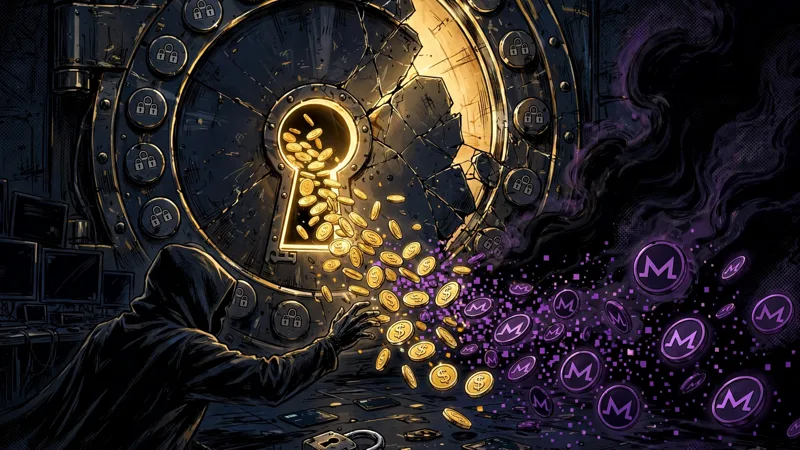
A Gnosis Safe multisig wallet lost about $6.45 million on November 16, 2026, after funds moved out through its Zodiac Roles permissions module instead of a signed multisig transaction, according to PeckShield, citing on-chain analyst Specter. About $4.3 million in USDC ($USDC) and $1.7 million in syrupUSDC left in a single transaction, and about $1.2 million was converted into Monero ($XMR). The cause is not confirmed, the owner is not named, and Safe, Gnosis Guild and Maple had not commented.

SuperRare ($RARE) Jumps 80% in a Day Off a Fresh All-Time Low as Token Unlocks End
SuperRare ($RARE) jumped 80.76 percent in 24 hours to $0.01524 on November 16, 2026, a day after setting a fresh all-time low of $0.00827, as trading volume surged past $26 million on Binance alone. With the token vesting schedule ended in 2025 and no new cliff unlock scheduled, analysts link the multi-week climb to the end of new supply, though no fresh announcement from SuperRare explained the timing of the jump.

Aster Token Crashes 32% in 15 Minutes as CEO Blames Likely Malicious Liquidations
Aster ($ASTER) ran up about 30 percent in an hour to $0.7124, then fell 32.5 percent to $0.4812 in about 15 minutes in the early hours of November 16, 2026, before rebounding to about $0.55. Chief executive Leonard Leung said the swing came from liquidations of highly leveraged positions that were likely malicious, said his team is investigating, and said Aster has no market-making arrangements for the token. CoinGlass logged about $1.29 billion in ASTER futures volume and about $9.1 million in liquidations over 24 hours.