

Fusionist Traces $5.7M ACE Bridge Hack to an Open Test-Server Database as New Contract Goes to Audit
Published November 26, 2026, 9:25 PM PKT. Based on Fusionist's own November 26 statement as reported by Odaily (primary source) and Bitquery's on-chain investigation updated November 26 (secondary source), with background from MABOnChain's earlier coverage of the Fusionist bridge exploit.
Fusionist has confirmed how attackers stole the keys to its Endurance cross-chain bridge: through a database left open to the internet on a test server. The Web3 gaming studio said on November 26 that it has now identified the attacker's route into its systems, fixed the vulnerabilities, and completed a new BEP-20 ACE ($ACE) contract that is being deployed alongside a rebuilt bridge. The disclosure answers the central question left open since November 22, when the bridge began minting unbacked ACE tokens and the token's price collapsed to almost nothing.
The break-in started three days before the first fake mint, according to a timeline Fusionist's chief technology officer shared with blockchain analytics firm Bitquery. At 12:24 UTC on November 19, the attacker reached a PostgreSQL database that sat open to the internet inside a Docker container on a test server. A recently disclosed flaw let an ordinary database account run programs, so the attacker could run commands inside the container. On November 20, the attacker broke out of the container onto the server itself and planted a backdoor.
From that server, the attacker took the logins for Fusionist's code-hosting platform. On November 21 and 22, the attacker planted short scripts in more than 30 code repositories. The scripts copied out the server logins and other secrets that the deployment pipelines keep, and the attacker deleted each script right after it ran. With those logins, the attacker reached the bridge's servers on November 22, with no failed attempt recorded. Fusionist's team was asleep in Singapore and took several hours to step in, Bitquery reported.
Three days from an open database to the bridge keys
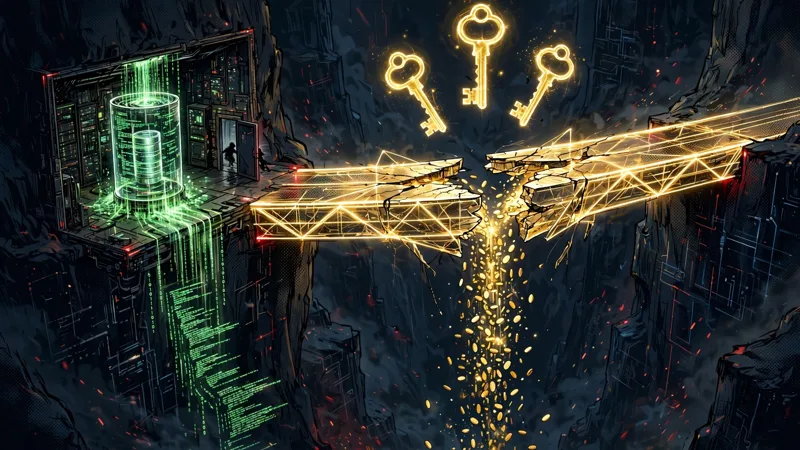
The bridge that moves ACE ($ACE) between Fusionist's own Endurance chain and BNB Chain trusts three keys. One key asks for each mint, a second approves it, and a third makes the tokens. Three keys should mean three locks, because a thief with one key still needs the other two, as long as the keys live apart. On November 22, the thief held all three.
Bitquery read every event the bridge has sent on BNB Chain since it opened. Each fake mint carries all three signatures, in order, from the three usual keys, and no new key appears anywhere in the record. The keys are the same ones that signed more than 3,300 real mints since 2023, and the bridge had not granted or taken away a role since September 2025. The keys also share a history: Fusionist's deployer wallet funded each of them with a little BNB ($BNB) in December 2023.
On Monday morning, all six Fusionist bridge wallets sent their BNB ($BNB) to one address in the same second, at 03:12 UTC. Each transfer needed its own key, so one person held all six. Fusionist took the roles away from all three mint keys at 09:59 UTC on November 23, in a single transaction, about 16 hours after the first fake mint. No mint has come since, so the stolen keys can no longer print ACE ($ACE) on BNB Chain.
59 fake mints, then the bridge paid out its own backing
Bitquery corrected its count of fake mints from 62 to 59. The first wave hit at 17:55 UTC on November 22, creating 60 million ACE ($ACE), more than all the wrapped ACE ($ACE) in existence. A second wave made 300 million more, and the mints kept growing, from 55 million tokens to 2 billion, then to trillions. The last mint, on Monday morning, made 23 sextillion tokens. Before the attack, the bridge minted about 24 times per month. It minted 59 times in 11 hours.
The thieves did most of the selling. Their wallets sold $1.73 million of ACE ($ACE) for USDT ($USDT) on decentralized exchanges, 57 percent of all ACE ($ACE) sold for USDT ($USDT) after the first mint. Everyone else together sold $1.29 million. ACE ($ACE) traded at around 12 cents before the attack, and within about an hour it was worth less than a millionth of a dollar.
The worst damage came through the bridge's other door. Anyone with wrapped ACE ($ACE) can send it back to Endurance, and the burn key approves the trip and Endurance releases real ACE ($ACE). But the burn key cannot tell a fake token from a real one, because both are the same wrapped ACE ($ACE). Traders bought the crashed token for almost nothing and sent it home. In two hours, the burn key approved 42 trips back for 23 wallets, releasing 53.7 million real ACE ($ACE) and leaving 148 ACE ($ACE) of backing. In the three years before the attack, all the trips back together moved 1.13 million ACE ($ACE). These two hours moved 48 times that.
1,154.9 ETH into Tornado Cash
The money trail ran through Tornado Cash in both directions. Half an hour before the first mint, a fresh wallet withdrew about 1 Ether ($ETH) from the mixer, bridged it to BNB Chain to pay transaction fees, and sent a little BNB ($BNB) to each of 13 new wallets. After the attack, the collector wallet began depositing Ether ($ETH) into Tornado Cash, ten deposits of 100 Ether ($ETH) in seven minutes, and seven smaller deposits over the next two days brought the total to 1,154.9 Ether ($ETH), about $1.98 million.
The loss figure for the whole incident is still not settled. SlowMist puts the combined loss at $5.7 million, an estimate that covers the thieves' sales and the real ACE ($ACE) drained through the bridge's return path, not an audited final total. Fusionist says it is still counting the losses and working with exchanges on what it can recover. Bithumb halted ACE ($ACE) trading on November 23 after finding signs that abnormally issued ACE ($ACE) had entered exchanges, and Gate rolled back some ACE ($ACE) and USDT ($USDT) trades from the exploit window and moved ACE ($ACE) perpetual futures into liquidation-only mode.
New contract, new bridge, and the questions left open
Fusionist's November 26 update, reported by Odaily, says the new BEP-20 ACE ($ACE) contract is complete and the team is deploying a new cross-chain bridge, with the relevant contracts currently under audit. The team is also rolling out a security upgrade for the Endurance mainnet, has patched all identified server and database vulnerabilities, and has rotated or revoked all security-related keys. It is coordinating with exchanges on remediation.
What the update does not do is close the incident. The new bridge contracts are under audit, not yet cleared, and Fusionist has not announced a compensation or reimbursement plan for holders or traders who lost money. The burn key keeps its role, and the bridge shows no pause on record, so the risk now sits with anyone who still holds wrapped ACE ($ACE) or buys it hoping to send it home, since the backing behind those trips is gone.
The root-cause account itself comes with a limit Bitquery states plainly: the chain shows which keys signed the fake mints, but how the thief got them comes from Fusionist's own timeline, and no outside party can check Fusionist's servers. The Endurance side is also not in Bitquery's data, so who received the real ACE ($ACE) on Endurance cannot be seen from the BNB Chain record. No person or group has been named as the attacker. Bitquery also notes that a single stolen key drained the Cyber bridge a day earlier, a reminder that the Fusionist break-in was not the only bridge key compromise that weekend.
This article is news reporting and is not investment advice.
Sources
- Odaily, Fusionist公布ACE攻击事件安全更新:已修复服务器及数据库漏洞,正部署新合约 (primary source: Fusionist's own November 26 statement, reporting that the team has confirmed how the attacker gained access and carried out the attack; a new BEP-20 ACE contract is complete and being deployed; a new bridge system is being deployed with the relevant contracts under audit; a security upgrade for the Endurance mainnet is underway; all identified server and database vulnerabilities have been fixed; all security-related keys have been rotated or revoked; the team is coordinating with exchanges on remediation. Fusionist's post itself is on X, which could not be fetched directly, so the statement is carried via Odaily's report of it.)
- Bitquery, Fusionist ACE Hack: 3 Stolen Keys Left 148 ACE of Backing (secondary source: investigation updated November 26, checked to 08:44 UTC; Fusionist's CTO shared the company's timeline, which starts at 12:24 UTC on November 19 with an open PostgreSQL database in a Docker container on a test server; a recently disclosed flaw let an ordinary database account run programs; the attacker broke out of the container onto the server on November 20 and planted a backdoor; scripts planted in more than 30 code repositories on November 21 and 22 copied server logins and secrets from deployment pipelines; the attacker reached the bridge servers on November 22 with no failed attempt; the team was asleep in Singapore and took several hours to step in; 59 fake mints, corrected from 62, starting with 60 million ACE at 17:55 UTC on November 22; the last mint made 23 sextillion tokens; the thieves sold $1.73 million of ACE for USDT on decentralized exchanges, 57 percent of all ACE sold after the first mint; 53.7 million real ACE approved for return in two hours across 42 trips by 23 wallets, leaving 148 ACE of backing; 1,154.9 ETH, about $1.98 million, deposited into Tornado Cash in 65 deposits; all six bridge wallets sent their BNB to one address in the same second at 03:12 UTC on November 23; Fusionist revoked all three mint keys at 09:59 UTC on November 23; no mint has come since; the burn key keeps its role but the backing is gone; a single stolen key also drained the Cyber bridge a day earlier)
- Gate News, Fusionist Updates ACE Security Breach: Deploys New BEP-20 Contract, Fixes Server Vulnerabilities (secondary source: reports Fusionist disclosed the latest details of its ACE security incident on November 26, confirming the attacker's method; a new BEP-20 ACE contract has been completed and is being deployed alongside a new bridge system, which is undergoing audit; the team has fixed all identified server and database vulnerabilities, rotated and revoked security-related credentials, and is coordinating with exchanges on remediation efforts)
- KuCoin News, Fusionist Completes New BEP-20 Contract and Is Undergoing Audit (secondary source: reports Fusionist confirmed on November 26 how the attacker gained access and carried out the attack; a new BEP-20 ACE contract has been completed and the team is deploying a new cross-chain bridge, with relevant contracts currently under audit; the team is rolling out a security upgrade for the Endurance mainnet and has patched all identified server and database vulnerabilities and rotated or revoked all security-related keys)
- MABOnChain, Fusionist Bridge Exploit Mints 10 Quadrillion ACE, Drains About $1.04 Million in USDT (background: the November 22 exploit, the first wave of fake mints, and the initial $1.04 million USDT drain)
- MABOnChain, Fusionist Exploit Fallout Reaches Exchanges; SlowMist Puts Loss at $5.7M (background: SlowMist's $5.7 million combined loss estimate, Bithumb halting ACE trading on November 23, and Gate rolling back trades and moving ACE perpetuals to liquidation-only mode)
MABOnChain Daily Brief
The key crypto and markets stories in one short, plain-language email. Free. Unsubscribe any time.
Prefer chat? Join us on Telegram Watch on YouTube
Keep reading

Standard Chartered's Zodia Custody Suffers Data Breach, Client Names and Emails Exposed
Zodia Custody, the crypto custodian Standard Chartered agreed to buy in October, confirmed on November 26 that an unauthorized party accessed limited client information after the firm detected attempts to probe its platform on November 23. The exposed data was publicly available details about client organizations plus, for a small number of clients and employees, a business contact name and email address. Zodia temporarily took its business-to-business API offline, restored it after adding security measures, and said its investigation so far has found no unauthorized transactions.

Bank of England Calls Quantum-Resistant Cryptography an Immediate Priority as Bitcoin and Ethereum Harden Defenses
The Bank of England's Financial Policy Committee said in its November 26 Financial Stability Report that an orderly transition to quantum-resistant cryptography is the immediate financial stability priority, warning that quantum computing could compromise the cryptography behind payments and digital signatures. Bitcoin ($BTC) developers are weighing BIP 360 and BIP 361 while Glassnode estimates 7.12 million BTC sits behind publicly exposed keys, and Ethereum ($ETH) researchers are targeting a quantum transition by 2028.

Switzerland's First Spot Bitcoin ETF Debuts on SIX as Europe's Only Spot Bitcoin Fund
BIT Asset Management's Bitcoin Fund ETF (BBIT) began trading on SIX Swiss Exchange on November 26, 2026, Switzerland's first spot Bitcoin ETF and, BIT says, currently Europe's only spot Bitcoin ETF. The fund launched with 350 Bitcoin in assets, a 0.19% annual fee, and trades in US dollars and Swiss francs, with its Bitcoin held in segregated cold storage at AMINA Bank.

UK FCA Pushes Ahead With Tighter DeFi Rules, Citing the $6.3 Billion Binance Hack
The Financial Times reported on November 26 that the UK Financial Conduct Authority plans to proceed with authorization requirements for decentralized finance platforms, citing money laundering risks exposed by the $6.3 billion Binance hack, and to require UK retail equity orders, including tokenized stocks, to be executed only on regulated platforms. Industry pushback has come from Coinbase and Aave Labs, with final guidance expected in January 2027 ahead of the new regime starting October 25, 2027.