

EU Proposes 22nd Russia Sanctions Package Targeting Crypto Platforms and 60 Banks
Published November 24, 2026, 1:15 PM PKT. Based on the European Commission statement by President Ursula von der Leyen dated November 23, 2026 (primary source), with corroboration from the Associated Press, DC Forecasts and Europe Says, all published November 23, 2026.
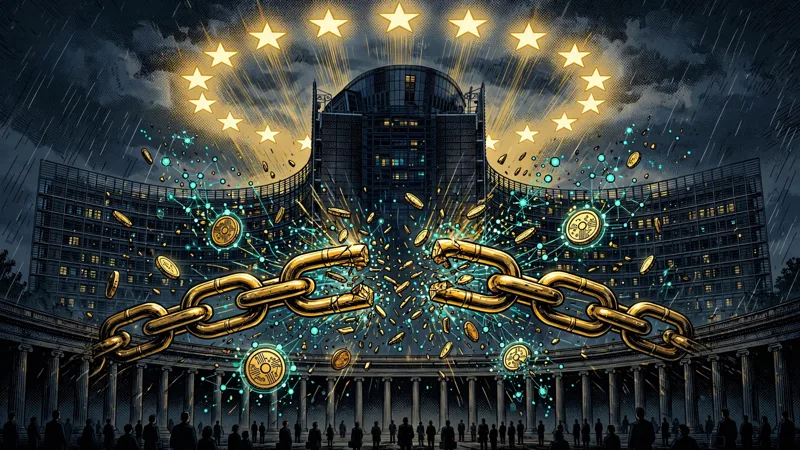
The European Commission has proposed its 22nd package of sanctions against Russia, putting crypto platforms and payment networks at the center of a new crackdown on the ways Moscow finances its war in Ukraine. Commission President Ursula von der Leyen presented the package in Strasbourg on November 23, saying the bloc is "striking harder at Russia's ways to finance its war by targeting its banks and crypto platforms."
The financial measures are the sharp end of the package. The Commission wants to extend its transaction ban to about 60 Russian banks, and von der Leyen said all 60 would be removed from SWIFT, the messaging system banks use for international payments. The package also targets the crypto and payment networks Russia uses to move money around sanctions, and it reaches beyond Russia itself: von der Leyen said the measures will cover third countries that help Russia evade the restrictions, and she pointed to the Crypto Sanctions Task Force the Commission launched earlier in November to coordinate that work with international partners.
Sixty banks face a transaction ban and a SWIFT cutoff
The banking tranche is the largest in any package so far. The 20th package added 20 Russian banks to the transaction ban and the 21st added 33, according to DC Forecasts, while the new proposal names about 60. Once a bank is under the transaction ban it is cut off from the EU financial system, and removal from SWIFT takes away the messaging channel its cross-border payments depend on.
The Commission did not publish a list of the 60 banks with the announcement, and the crypto side of the package is framed the same way: a crackdown on platforms and payment networks, with no individual platforms named yet. That contrasts with the 21st package, adopted on July 23, 2026, which listed 14 crypto platforms and crypto-linked firms in Georgia, Panama, El Salvador, the United Arab Emirates, the Marshall Islands and Belarus. The names, if any, will come when the legal text is finalized.
The crypto crackdown reaches beyond Russia
The crypto element is the part of the package the Commission singled out as a major focus. Von der Leyen said: "We are cracking down on the crypto and payment networks. We will focus on Russia but also include third countries that help Russia to evade our sanctions. This is a major focus of our new package. And an important area where we want to align efforts with international partners."
The Crypto Sanctions Task Force is the enforcement arm behind that language. The Commission launched the task force earlier in November, and this site reported its launch on November 8. Its job is to track how sanctioned money moves through crypto and payment networks and to help member states act on what it finds. The 22nd package is the first sanctions round presented since the task force was set up, and it is the first to make crypto evasion networks, rather than individual platforms, a headline target.
For crypto firms, the practical effect depends on the final text. A platform named in an EU sanctions package faces asset freezes and a ban on EU persons doing business with it, and the third-country language means firms outside Russia that route sanctioned payments can be listed too. Until the package is adopted, the exposure is to the proposal as drafted, and the list of targets can still change.
A proposal, not yet law
None of the measures take effect yet. The proposals must be endorsed by all 27 European Union member states before they can enter into force, and the Associated Press reported that the process can take weeks and the planned measures are likely to be modified. The Commission has already sanctioned more than 4,700 people and entities over the war, including President Vladimir Putin, and it posted its single biggest listing just over a month ago, targeting almost 1,600 Russian officials and companies linked to the arms industry.
The unanimity rule gives every member state a veto, and past packages have been reshaped in negotiation before adoption. The banking and crypto measures are the most likely to survive intact, since they are the package's stated centerpiece, but the final list of banks and any named crypto platforms will only be known when the Council adopts the text.
What else is in the package
Beyond finance, the package expands the energy services ban so no European company can help Russia build, operate or repair its energy infrastructure, including refineries, and for the first time the ban also covers electricity services. The Commission wants to list more than 70 additional vessels from Russia's shadow fleet, the tankers the Kremlin uses to move illicit oil, and to ban all tanker vessels insured in Russia from European ports.
The package also proposes a visa ban for Russian ex-combatants, a ban on Europeans holding posts in the governing bodies of companies in Russia, and a set of sports and culture measures: Russian teams and athletes would be barred from competing under the Russian flag at events in the EU, the display of official Russian symbols would be banned, financial flows from Russian sponsors to European sports and cultural associations would be restricted, and Russians would face restrictions on posts in the governing bodies of European sports federations.
This article is news reporting and is not investment advice.
Sources
- European Commission, Statement by President von der Leyen on the 22nd package of sanctions against Russia, published November 23, 2026 (primary source: the Commission presents the 22nd package of sanctions; the aim is to keep pressure on Russia to end the war of aggression in Ukraine; the package targets banks and crypto platforms; the transaction ban is extended to some 60 Russian banks, all to be removed from SWIFT; the crackdown covers crypto and payment networks, including third countries that help Russia evade sanctions; the Crypto Sanctions Task Force was launched to support this work; the energy services ban is expanded, including electricity services for the first time; over 70 more shadow fleet ships are to be listed, with a proposed ban on tanker vessels insured in Russia; a visa ban for Russian ex-combatants is proposed; Europeans are to be prohibited from occupying posts in the governing bodies of companies in Russia; Russian teams and athletes competing under the Russian flag are to be banned from EU sports events, the display of official Russian symbols is to be banned, and financial flows from Russian sponsors to European sports and cultural associations are to be restricted)
- Associated Press, EU proposes sweeping new Russia sanctions targeting banks, crypto and sports events, published November 23, 2026 (secondary source: the proposals, put forward by Commission President Ursula von der Leyen, must be endorsed by all 27 European Union member countries before they can enter into force; the process can take weeks and the planned measures are likely to be modified; 60 banks will be removed from SWIFT; countries helping Russia to evade sanctions could be caught by the EU crypto measures; the Commission wants to target 70 more shadow fleet vessels and ban all tanker vessels there from European ports; the bloc has already hit more than 4,700 people and entities, including President Vladimir Putin; the proposals come just over a month after the EU posted its single biggest listing, targeting almost 1,600 Russian officials and companies linked to the arms industry)
- DC Forecasts, EU's 22nd Russia Sanctions Package Targets Crypto Rails, published November 23, 2026 (secondary source: the package was presented in Strasbourg on November 23; the 20th package added 20 Russian banks to the transaction ban and the 21st added 33, while the new proposal names about 60; the 21st package, adopted on July 23, 2026, listed 14 crypto platforms and crypto-linked firms in Georgia, Panama, El Salvador, the UAE, the Marshall Islands and Belarus; the 22nd package statement did not name any country or platform; the package is still only a proposal and EU sanctions need unanimous approval from all 27 member states)
- Europe Says, EU presents new sanctions package against Russia: banks, shadow fleet and ban on athletes, published November 23, 2026 (secondary source: European Commission President Ursula von der Leyen presented the EU's 22nd sanctions package on Monday, November 23; the package extends the transaction ban to around 60 Russian banks, all of which will be removed from SWIFT; the Commission is cracking down on crypto and payment networks, including third countries that help Russia evade sanctions, and has launched a Crypto Sanctions Task Force)
MABOnChain Daily Brief
The key crypto and markets stories in one short, plain-language email. Free. Unsubscribe any time.
Prefer chat? Join us on Telegram Watch on YouTube
Keep reading

ECB to Accept Tokenized Securities From DLT Pilot Platforms as Eurosystem Collateral From June 2027
The European Central Bank's Governing Council has approved accepting marketable assets issued on distributed ledger platforms licensed under the EU DLT Pilot Regime as eligible collateral for Eurosystem credit operations, with the change taking effect in June 2027. Eligible securities must meet all standard collateral criteria and reach the Eurosystem through a central securities depository that settles on TARGET2-Securities, and the decision covers tokenized securities, not Bitcoin or stablecoins. It is the second expansion of the Eurosystem's collateral framework for DLT-based assets in under a year.
Coinbase Wins Dismissal of TerraUSD Class Action as Judge Rules Its Disclosures Were Enough
A federal judge in California has dismissed Larry Pearl's class action against Coinbase over TerraUSD purchases made shortly before the token collapsed in May 2022, ruling that Coinbase's website had already disclosed that the stablecoin was not backed by U.S. dollars in a bank account and that minting it required burning its sister token LUNA. Judge Maxine M. Chesney also rejected the claim that TerraUSD was an unregistered security, finding Pearl failed to plead a common enterprise or an expectation of profit under the Howey test. The dismissal, without leave to amend, ends the case at the district court level.
Kalshi Pauses Utah Operations for 177,000 Users as New York Judge Lets It Keep Trading
Kalshi has paused operations in Utah, cutting off more than 177,000 users from placing new event contracts, after a federal judge let the state enforce its gambling laws and an appeals court refused to block enforcement. The same day, a New York judge declined the state attorney general's request for a temporary restraining order, so Kalshi keeps trading in New York while the Commodity Futures Trading Commission's bid to stop Utah's enforcement waits for a ruling.

Orochi Network ($ON) Jumps 19% as Futures Traders Pile In Ahead of Today's Token Unlock
Orochi Network ($ON) climbed about 19% in 24 hours to $0.1387, ranking second on CoinGecko's trending list while Bitcoin ($BTC) fell 1.25%, as futures open interest jumped a third and trading volume neared $16 million. The rally lands on the day of a scheduled unlock of 12.35 million ON, worth about $1.4 million, and no project announcement explains the move. The token is still about 69% below its August all-time high, with only 14% of its maximum supply in circulation.