

U.S. Files to Forfeit $1.1 Billion in USDC Stolen in Binance Hack, First Formal Claim on the North Korea Theft
Published November 24, 2026, 1:39 AM PKT. Based on the U.S. Department of Justice press release (primary source), with reporting from Reuters and Crypto Briefing as secondary sources.
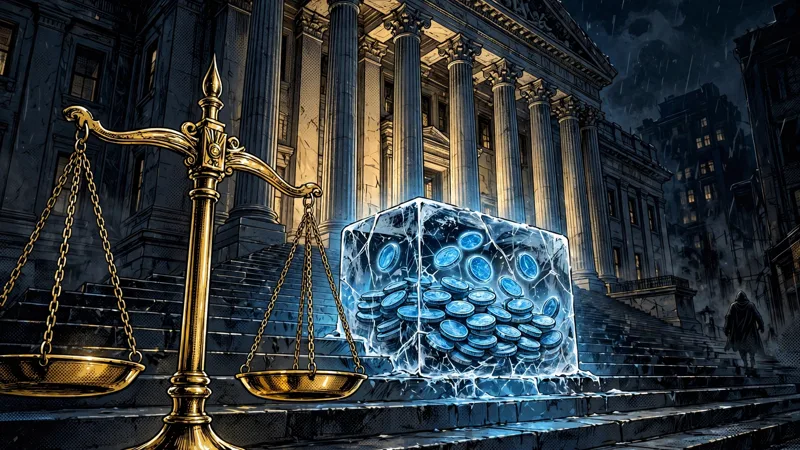
The U.S. Justice Department filed a civil claim on Monday, November 23, 2026, to forfeit more than $1.1 billion in USDC ($USDC) that North Korean actors stole from Binance on or about October 29, the first formal forfeiture move on the largest cryptocurrency theft ever recorded. The filing, made in federal court in Washington, D.C., asks a judge to take control of the stablecoins as proceeds of the theft, and it marks the point where the government's recovery effort moves from freezing the money to claiming it in court.
The coins at issue are the stablecoin issued by Circle Internet Financial, and they were already locked down before Monday. According to the Justice Department, the same funds were subject to a government-requested restraining order that followed the theft, the order announced on November 12 when the department said it had obtained court authorization to seize or restrain more than $1.2 billion in assets tied to the attack. Monday's filing does not find new money. It converts that restraint into a civil forfeiture case, the legal step that lets the government seek permanent control of the funds and, eventually, return them to victims.
"This forfeiture action is the latest example of our efforts to combat the North Korean government's attempts to profit from the injustices it repeatedly inflicts upon innocent victims," said M. Scott Proctor, the acting principal deputy assistant attorney general for national security, in the department's release. "The commencement of this forfeiture action so soon after the restraint of these same assets reflects our commitment to ensuring that victims remain at the forefront of our work."
The first formal claim on the stolen coins
The case is a civil claim against the funds themselves, not against a named person. No individual hacker or entity is named as a defendant in the Justice Department's release, and the action proceeds against the asset, the more than $1.1 billion in USDC ($USDC) that the government alleges is proceeds and laundered funds from the Binance theft. Crypto Briefing, which reviewed the filing, puts the figure at $1.17 billion. The case is docketed in the U.S. District Court for the District of Columbia as case number 26cv4150.
The theft it traces back to took place on or about October 29, when North Korean cyber actors stole more than $6 billion in cryptocurrency from Binance, according to the Justice Department. Crypto Briefing puts the total loss at approximately $6.3 billion to $6.34 billion, and attributes the attack to TraderTraitor, a North Korean hacking group. Binance is the world's largest cryptocurrency exchange by trading volume, and the October 29 theft is the largest exchange hack ever recorded by value.
Three agencies are investigating the case: the FBI, the U.S. Secret Service and IRS Criminal Investigation. The Justice Department credited Circle with providing valuable assistance, and the Secret Service said its investigators worked to identify and freeze stolen funds within minutes of the hack. "Secret Service investigators worked with precision to identify and freeze stolen funds within minutes of the hack," said Todd Bratz, special agent in charge of the Secret Service Criminal Investigations Division. "Our team will continue working with industry partners to monitor accounts holding additional stolen funds."
The $2.9 billion recovery tally, and what it leaves open
The Justice Department said that to date, the United States has assisted in the freezing, seizing, and/or the return of over $2.9 billion worth of cryptocurrency from multiple sources since the theft from Binance. That tally covers everything recovered so far, not just Monday's filing, and the release does not say whether the $1.1 billion targeted in the forfeiture claim sits inside that $2.9 billion or on top of it. The November 12 announcement had put the frozen and seized figure at more than $2.7 billion, so the recovery total has grown by at least $200 million in the 11 days since, but the department has not broken down how much of the new total is frozen, how much is seized and how much has actually been returned.
"North Korean cyber hackers stole more than $6 billion in cryptocurrency from Binance, but swift coordination between the government and private sector partners helped prevent a substantial portion of those assets from disappearing," said A. Tysen Duva, assistant attorney general of the Justice Department's Criminal Division. U.S. Attorney Jeanine Ferris Pirro for the District of Columbia added that her office would go "toe to toe with our adversaries, and help victims of crime," whether the culprit is "a lone hacker or an enemy nation state."
What the filing does not answer is when, or how, the money gets back to victims. The release gives no timeline for the forfeiture case, no date for resolution and no indication whether any party will contest the claim. It also does not say how forfeited funds would be divided between Binance and its users. For now, the $1.1 billion in USDC ($USDC) stays frozen while the court case runs, and the recovery effort continues against the more than $3 billion of the theft that the government has not yet accounted for.
This article is news reporting and is not investment advice.
Sources
- U.S. Department of Justice, United States Files Action to Recover More Than $1 Billion in Cryptocurrency Assets Stolen by North Korean Cyber Actors in Binance Hack, November 23, 2026 (primary source: Justice Department announced actions to forfeit over $1.1 billion in cryptocurrency criminally obtained by North Korean actors from Binance last month; civil claim filed to forfeit over $1.1 billion of USDC, a stablecoin issued by Circle Internet Financial, as proceeds and laundered funds from the theft; assets previously subject to a government-requested restraining order; United States has assisted in the freezing, seizing, and/or the return of over $2.9 billion worth of cryptocurrency from multiple sources since the theft from Binance on or about Oct. 29; North Korean cyber hackers stole more than $6 billion; FBI, U.S. Secret Service and IRS Criminal Investigation investigating; Circle provided valuable assistance; quotes from M. Scott Proctor, A. Tysen Duva, Jeanine Ferris Pirro, Brett Leatherman and Todd Bratz; press release number 26-1400)
- U.S. Department of Justice, U.S. Attorney's Office for the District of Columbia, United States Files Action to Recover More Than $1 Billion in Cryptocurrency Assets Related to North Korean Cyber Actors in Binance Hack, November 23, 2026 (secondary source: same announcement from the prosecuting office; case number 26cv4150; recovery total described as almost $3 billion)
- Reuters, US files action to recover over $1 billion in cryptocurrency stolen in Binance hack, November 23, 2026 (secondary source: Justice Department filed a civil claim on Monday to recover more than $1 billion in cryptocurrency assets stolen by North Korean cyber actors in a recent hack of Binance; funds under a temporary restraining order issued Nov. 12 and served on Circle Internet Financial)
- Crypto Briefing, US prosecutors seek to forfeit $1.17 billion in stolen USDC from Binance hack, November 23, 2026 (secondary source: civil forfeiture complaint filed November 23 in Washington, D.C., first time the government has formally moved to take control of assets taken in the breach; $1.17 billion figure; on November 12 and 13 the Department of Justice obtained court authorization to seize or restrain more than $1.2 billion in assets linked to the attack; issuer froze between $823 million and $1.1 billion in USDC; breach took place October 29, 2026, attributed to TraderTraitor; total losses estimated at approximately $6.3 to $6.34 billion)
MABOnChain Daily Brief
The key crypto and markets stories in one short, plain-language email. Free. Unsubscribe any time.
Prefer chat? Join us on Telegram Watch on YouTube
Keep reading
Nvidia Reinstates Jensen Huang as CEO in Unanimous Vote, Reversing Course Six Days After Ruling Out His Return
Nvidia's board voted unanimously on Monday, November 23, to reinstate Jensen Huang as president and chief executive, 11 days after he resigned and six days after the board said it had no intention of bringing him back. Shares opened 30% higher, and the board said input from senior U.S. government officials left it confident the return poses no national security risk.
Chainflip's 10% Bounty Offer Expires With No Funds Returned as Protocol Stays Halted
Chainflip's offer to its attacker, keep 10% and return 90% of the roughly $12 million taken from its vaults on November 21, expired at 18:38 UTC on Monday, November 23, with no funds returned. MABOnChain checked both official return addresses on public block explorers: the Bitcoin address shows zero transactions, and the Ethereum address received no transfer of value. The protocol remains in full safe mode with no incident report or compensation plan published yet.
New York Judge Declines to Block Kalshi for Now as Prediction Market Keeps Operating
A New York judge declined on Monday, November 23, to grant Attorney General Letitia James an immediate order halting Kalshi, so the prediction market keeps operating while the court sets an expedited briefing schedule on a preliminary injunction. The judge asked the parties to work out safeguards for users aged 18 to 21 and set a tentative hearing for next Monday.

Pearl ($PEARL) Takes a Second Run at Its $2.46 Record After a Dip to $1.99, Up 13% in a Day
Pearl ($PEARL) traded at about $2.31 on November 23, up about 13% in 24 hours and about 40% in a week, closing within about 6% of its $2.46 all-time high after dipping to $1.99 two days earlier. No new development from the past day explains the move, according to CoinStats and CoinMarketCap analysis, with the FP8 testnet upgrade and the November 13 exchange listings still the backdrop, while only about 18% of the token's 2.1 billion maximum supply circulates.