

US Justice Department Backs Challenge to Illinois' 0.2% Crypto Tax as DeFi Giants Join the Fight
Published November 13, 2026, 2:45 AM PKT. Based on the Blockchain Association and Crypto Council for Innovation announcement published on November 12, 2026 (primary source), and reporting from CoinTelegraph and Decrypt the same day (secondary sources). Market data from CoinGecko, November 12, 2026.
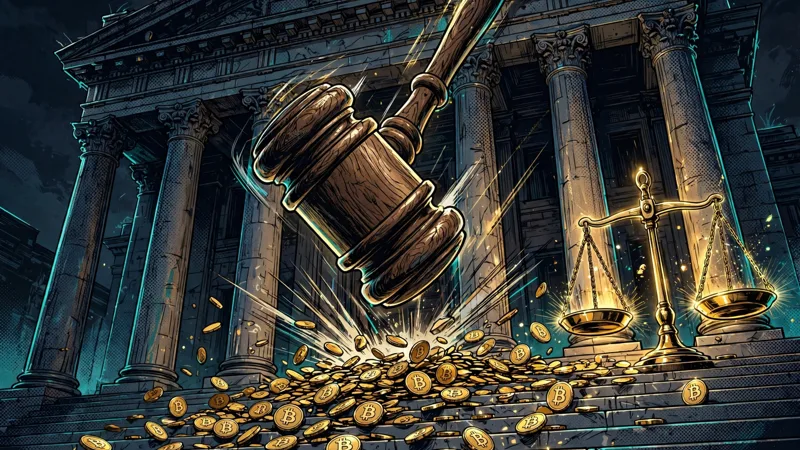
The US Justice Department has thrown its weight behind the legal challenge to Illinois' first-of-its-kind tax on digital asset transactions, joining Wall Street's biggest lobby, the US Chamber of Commerce and a coalition of the crypto industry's largest firms and venture investors. The filings, announced on November 12, turn a state tax dispute into a federal policy fight, with the Justice Department arguing the tax undermines Washington's own efforts to promote crypto innovation.
The law at issue is Illinois' Digital Asset Tax Act, enacted in June 2026. It imposes a 0.2% tax on the full value of a digital asset every time an Illinois customer exchanges, transfers or stores it through a broker, even when there is no sale, no gain and no change in ownership. Illinois imposes no comparable tax on dollars, gold, stocks or any other asset, and no other state has a tax like it, according to the Blockchain Association. The governor's budget office projected the tax would raise $60 million in fiscal year 2027.
A 0.2% tax on every move, profit or not
The mechanics are what make the tax unusual. A customer who loses money owes the same tax as a customer who earns a profit, the Chamber and SIFMA filing said, and a customer who moves the same asset between two accounts faces tax, potentially on both ends, without a sale, a gain or a change in beneficial ownership. The tax applies to the full value of the asset each time it moves, not to any profit, so repeated transfers of the same holding can be taxed again and again.
The challenge to the law dates to the summer. The Digital Chamber sued Illinois Attorney General Kwame Raoul and state revenue official David Harris in July, followed by a separate challenge from the Blockchain Association and the Crypto Council for Innovation in August. The groups ask the court to declare the tax unlawful and permanently bar its enforcement. The tax was originally scheduled to take effect on January 1, 2027, but Illinois agreed in October to pause it until July 1, 2027, buying time for the court fight.
The Justice Department weighs in
The Justice Department filed its statement of interest on November 6, arguing that Illinois' tax undermines federal policy and American leadership in digital assets. The filing called the tax vague and discriminatory for singling out crypto for treatment no other asset faces, and said it imposes burdensome and arbitrary liability. It urged the court to reject Illinois' effort to undermine an industry critical to US innovation.
The filing pointed to specific federal policy steps as evidence of the direction Washington has set. It cited the creation of a Strategic Bitcoin Reserve and the GENIUS Act, the federal law that established rules for stablecoins, and argued that less favorable tax treatment for digital assets could conflict with those policies. Bitcoin ($BTC) is the asset the reserve holds, which is why the filing's argument reaches beyond Illinois to the treatment of crypto in federal policy generally.
Wall Street warns of felony penalties and nationwide costs
The US Chamber of Commerce and the Securities Industry and Financial Markets Association, which represents hundreds of broker-dealers, banks and asset managers, filed their amicus brief the same day, November 6. Their warning is that the tax reaches far beyond crypto-native platforms, to the traditional banks, custodians and advisers that increasingly offer digital asset products.
Their brief said firms would need to build costly new systems just to identify Illinois customers, value digital assets and determine which activities trigger the tax, all under the threat of felony penalties for violations. The groups also argued the tax discriminates against digital asset services because comparable transactions involving traditional assets are not taxed the same way, potentially violating federal internet tax protections and constitutional requirements for interstate commerce and uniform taxation.
Illinois House Speaker Emanuel "Chris" Welch previously promoted the measure as part of a broader affordability agenda aimed at "closing corporate loopholes and making big tech companies and crypto billionaires pay their fair share," the Chicago Tribune reported in July. Lawmakers involved in advancing the legislation and the governor's office did not respond to CoinTelegraph's requests for comment before publication.
The DeFi coalition and the developer problem
A third filing landed on November 11, from a coalition of builders and investors in decentralized technology led by the DeFi Education Fund, Andreessen Horowitz, Paradigm and Uniswap, and including Aave Labs, Aptos Labs, Aztec Labs, Chainlink Labs, the Decentralization Research Center, Figment, Hyperliquid Policy Center, Jito Labs, Multicoin Capital, Orca Creative, Phantom Technologies, the Solana Policy Institute and Stand With Crypto.
The coalition's brief explains how blockchain technology works and why the Act's definitions are vague and overbroad. It warns that the Illinois Department of Revenue's proposed rules would stretch the tax to software developers and decentralized protocols that hold no customer funds and have no way to identify users, collect a tax or know where a transaction took place. The brief also noted that an estimated 2.64 million Illinoisans hold digital assets, the fifth-highest total of any state.
"This tax is unclear, discriminatory, unconstitutional, and harmful to the future of finance," Crypto Council for Innovation CEO Ji Hun Kim and Blockchain Association executive Ashok Pinto said in a joint statement. "We're grateful for their support and confident the court will see Illinois' approach for what it is: an obstacle to future economic progress."
The court fight so far
All three filings support the Blockchain Association and Crypto Council for Innovation lawsuit in the Circuit Court of Sangamon County, Illinois. The groups have proposed, together with the state, that the court rule by March 1, 2027, a schedule that still requires the court's approval, according to TokenPost. The October pause means the tax cannot take effect before July 1, 2027, so the March target would settle the question months before any collection begins.
The stakes extend beyond Illinois. No other state has imposed a tax like this one, and the breadth of the coalition, from the Justice Department to Wall Street lobbies to DeFi's largest builders, signals that the industry sees Illinois as a test case. If the tax survives, other states could copy the model. If the court strikes it down, the ruling would set a limit on how states can tax crypto transactions that produce no gain.
The market context
The filings landed on a weak week for crypto markets. Bitcoin ($BTC) traded near $71,600 on November 12, down about 3.4 percent over 24 hours, while Ethereum ($ETH) hovered near $2,000, according to CoinGecko. US spot Bitcoin ($BTC) exchange-traded funds recorded about $299.8 million in outflows on November 11, a fifth straight day of withdrawals, and spot Ethereum ($ETH) funds lost $144.8 million the same day. The Crypto Fear and Greed Index stood at 28, in Fear territory.
What to watch next
The next facts to watch are whether the Sangamon County court approves the proposed March 1, 2027 ruling schedule, whether Illinois defends the tax on the merits or seeks a settlement, and whether any other state introduces a copy of the Illinois model while the case is pending. The Justice Department's involvement also raises the question of whether the federal government takes a further step, such as filing in support of a broader challenge, if the case moves to a higher court.
Sources
- Blockchain Association, Washington, Main Street, Wall Street, and DeFi Unite Against Illinois' Digital Asset Tax, November 12, 2026 (primary source: Justice Department statement of interest and Chamber of Commerce and SIFMA amicus brief filed November 6, DeFi coalition brief filed November 11, full coalition member list, tax imposes 0.2% on the full value of a digital asset every time an Illinois customer exchanges, transfers or stores it through a broker even with no sale, gain or change in ownership, no comparable tax on dollars, gold, stocks or any other asset, no other state imposes a tax like it, 2.64 million Illinoisans hold digital assets, fifth-highest total of any state, challenge first filed in August, state agreed in October to pause the tax until July 1, 2027, joint statement from Ji Hun Kim and Ashok Pinto)
- CoinTelegraph, US DOJ, Business and DeFi Groups Challenge Illinois Crypto Tax, November 12, 2026 (secondary source: Digital Chamber sued Attorney General Kwame Raoul and revenue official David Harris in July, Blockchain Association and Crypto Council for Innovation challenge in August, tax originally effective January 1, 2027 and delayed to July 1, 2027, $60 million fiscal 2027 revenue projection from the governor's budget office, SIFMA and Chamber warning on compliance systems and felony penalties, "a customer who loses money owes the same tax as a customer who earns a profit", DOJ cited the Strategic Bitcoin Reserve and the GENIUS Act, House Speaker Emanuel "Chris" Welch affordability agenda quote via the Chicago Tribune, lawmakers and governor's office did not respond to requests for comment)
- Decrypt, Illinois Crypto Tax Draws Unlikely Alliance of DOJ, Banks and DeFi, November 12, 2026 (secondary source: coalition filed briefs supporting the lawsuit to strike down the Digital Asset Tax Act, tax is a treatment no other asset or state faces, DOJ called the tax discriminatory, DeFi brief argues definitions could stretch to software developers and decentralized protocols with no customer funds, 2.64 million Illinoisans hold digital assets, joint statement from Ji Hun Kim and Ashok Pinto)
- TokenPost, Justice Department Backs Illinois Digital Asset Tax Challenge, November 11, 2026 (secondary source: parties proposed that a Sangamon County court rule by March 1, 2027, proposed schedule requires court approval)
This article is news reporting and is not investment advice.
MABOnChain Daily Brief
The key crypto and markets stories in one short, plain-language email. Free. Unsubscribe any time.
Prefer chat? Join us on Telegram Watch on YouTube
Keep reading

Trezor Confirms Spy Implants in Three Safe 5 Wallets and Cuts Its Reseller Network by 80%
Trezor said on November 12, 2026 that it has confirmed spy implants in three Safe 5 hardware wallets sold through Malaysian reseller CryptoBilis between August 20 and September 23, 2026, and has cut its authorized reseller network by about 80 percent after only a fifth of vendors met stricter rules on sourcing, storage and access. Firmware 2.13.1, released November 11, is designed to render the implants useless, but Trezor still urges CryptoBilis buyers to move funds to a new wallet with a fresh seed phrase, and says no customer funds have been reported stolen.

Binance Says It Has Fully Covered the $6.34 Billion Hack as Proof of Reserves Expands to 198 Tokens
Binance said on November 12, 2026 that it has completed coverage of the assets affected by its October 29 security incident, which drained about $6.34 billion from its hot wallets, and has published a new proof of reserves snapshot covering 198 tokens, up from 44 on November 4 and 10 on October 31. The exchange says it committed more than $6.34 billion of its own funds, drawn from its SAFU emergency reserve, its futures insurance fund and its corporate treasury, and will replenish SAFU to about $1 billion. The full zero knowledge proof will take about 40 to 50 hours to generate, so users cannot yet verify the 1:1 backing themselves, and withdrawals are still reopening in phases.
Unocoin Says It Cannot Yet Confirm the Full Damage as Unauthorised Transfers Surface From Its BitGo Wallet
Unocoin said on November 12, 2026 that it has identified outgoing transactions from an Ethereum ($ETH) address in its BitGo wallet infrastructure and cannot yet establish the full extent of unintended transfers, because its BitGo accounts remain frozen and it cannot log in to them. The Indian exchange is rebuilding its entire server infrastructure from scratch, a job it estimates will take 4 to 5 working days, while the root cause of the breach remains unknown.

Russia Green-Lights Crypto Trading From November 22, Starting With Bitcoin ($BTC), Ethereum ($ETH) and Tether ($USDT)
The Bank of Russia said on November 11, 2026 that licensed exchanges may begin organized cryptocurrency trading from November 22, 2026, once the central bank approves their trading rules, under an ordinance registered by the Ministry of Justice. Only Bitcoin ($BTC), Ethereum ($ETH) and Tether ($USDT) are approved for ordinary investors, who face a 300,000-ruble annual purchase cap per intermediary and a knowledge test, while Moscow Exchange and Sberbank target December 1 launches.