

Coinkite Postmortem: Coldcard Seed Flaw Hid for Five Years as 15 Security Reviews Missed It
Published November 25, 2026, 11:41 AM PKT. Based on Coinkite's November 23 postmortem report (primary source), with theft figures from Galaxy Research and reporting from Cointelegraph (secondary sources).
Coinkite has published a detailed postmortem explaining how a seed-generation defect in its Coldcard hardware wallets went undetected for more than five years, despite at least 15 independent security reviews, including reviews assisted by artificial intelligence. The flaw let attackers steal at least 1,789 Bitcoin ($BTC), worth about $114.7 million at the time of the thefts, according to Galaxy Research.
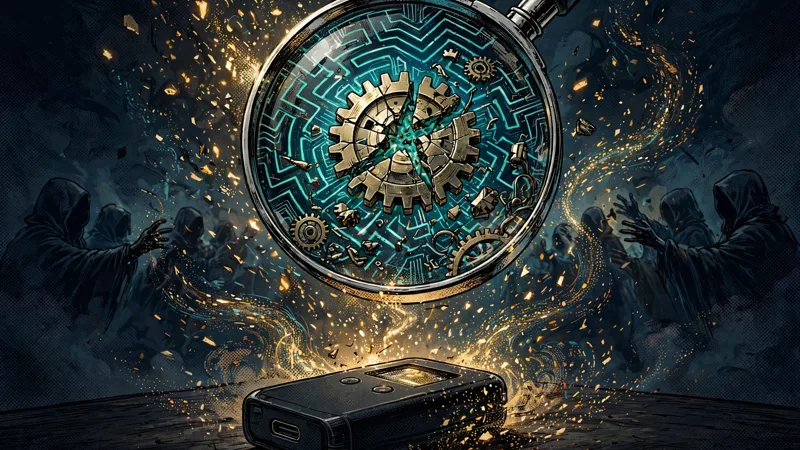
The 18-page report, published on November 23 and written in the style of an aviation accident investigation, traces the defect to a firmware configuration error. From March 29, 2021 through July 30, 2026, Coldcard firmware generated wallet seeds using MicroPython's Yasmarang software pseudo-random number generator instead of the device's STM32 hardware random-number generator, Coinkite said. A firmware setting switched the hardware generator off, and an ineffective guard in the libNgU cryptographic library accepted that setting, so the seed-generation path silently reached the weaker software generator.
The hardware generator was present in the firmware and had not failed, Coinkite said. The device built normally, seed creation appeared to work, and the recovery phrases looked well formed. The result was that affected seeds carried roughly 40 bits of effective entropy on Mk2 and Mk3 devices, or 72 bits on Mk4, Mk5 and Q devices, against the intended 128-bit security target, according to the report. With that little entropy, attackers could regenerate the private keys offline and drain the wallets without touching the devices.
The thefts began on July 29
Unexpected transactions involving affected seeds began on July 29, 2026, according to the report. Users discovered the thefts the next day, and Coinkite identified the defect on July 30 and published fixed firmware on July 31. Unshipped stock was quarantined at the factory and later decommissioned, and hardware production restarted on August 3.
Galaxy Research reported in August that at least 1,789 Bitcoin had been stolen from more than 8,600 addresses, based partly on direct contact with 190 people reporting losses. Coinkite's own support review, completed October 8, counted about 300 loss-related tickets tied to 242 accounts as of November 18, and the company said the actual number of victims was likely higher. A separate public analysis reconstructed at least 328 distinct seed roots from the first wave of thefts.
The flaw affected seeds generated on Mk2 and Mk3 firmware from version 4.0.1 through 4.1.9, on Mk4 and Mk5 firmware before 5.6.0, and on Q firmware before 1.5.0Q, Coinkite said. Fixed releases start at 4.2.0 for Mk2 and Mk3, 5.6.0 for Mk4 and Mk5, and 1.5.0Q for Q, with current releases at 5.6.3 and 1.5.3Q. An independent review by Keylabs, published October 15, concluded the defect is fully closed in those releases. Seeds generated outside the affected on-device flow, and seeds made with at least 50 fair dice rolls, were not weakened by the defect, according to the report.
Fifteen security reviews missed it
The report's sharpest finding is how many expert eyes passed over the defect. Coinkite listed at least 15 independent security reviews and research efforts that examined the firmware, its random-number generation, or adjacent tooling without identifying the integration error.
The list includes a paid pre-release Mk4 review by Lazy Ninja in March 2022, continued physical-security work by Ledger Donjon through 2023, and an AI-assisted firmware review by Rob Hamilton using the OpenAI Cybersecurity Harness between May and June 2026, which produced 85 candidate findings and several fixes but missed the defect. A firmware security review by Nick Farrow, dated June 17, 2026, expressly included weak random-number generation in its scope and concluded the path was sound. Coinkite said the defect escaped detection because the recovery phrases produced by the weaker system looked normal and could pass some security tests, and because the reviews confirmed the correct system existed without verifying that the shipping seed-generation path actually used it.
The report also records that independent Bitcoin developer James O'Beirne raised concerns about libNgU with Coinkite in May 2025. MABOnChain reported on October 22 that Coinkite faced a class-action lawsuit over the flaw, with the claim alleging the company's founders knew about the weakness since May 2025. The postmortem does not say whether O'Beirne's concerns identified the defect itself, and Coinkite has not said when it first understood the flaw existed.
Compensation still undecided
Coinkite said it is still exploring ways to help affected customers but has not decided on a compensation plan, according to the report. Cointelegraph reported it contacted Coinkite for comment on compensation plans and had received no response by publication. The company also said it still does not know who stole the funds or how the attackers found the flaw.
Law enforcement authorities are investigating the thefts, Coinkite said, and the Canadian Centre for Cyber Security has opened a separate case. The report's closing section addresses the holders of the stolen funds directly, asking them not to move or launder the Bitcoin and warning that the seeds they control remain traceable.
What Coldcard owners should do now
Coinkite continues to urge affected users to update their firmware, create new recovery phrases, and move their funds to new wallets. The company warned that a software update cannot make a previously affected recovery phrase safe, so users who generated a seed on affected firmware must replace the seed itself, not just install the fix.
Users can check whether they are affected and find the fixed releases on Coinkite's security status page. The report also states that a seed generated on affected firmware stays affected after being restored, imported, backed up, or cloned onto another device.
This article is news reporting and is not investment advice.
Sources
- Coinkite, COLDCARD Seed-Generation Incident: Postmortem (primary source: 18-page incident report published November 23, 2026; incident period March 29, 2021 to July 30, 2026; firmware used MicroPython's Yasmarang software pseudo-random number generator instead of the STM32 hardware generator because MICROPY_HW_ENABLE_RNG was set to zero and an ineffective guard in libNgU accepted it; affected seeds carried about 40 bits of entropy on Mk2/Mk3 and 72 bits on Mk4/Mk5/Q against a 128-bit target; thefts began July 29, 2026, defect identified July 30, fixed firmware published July 31; about 300 loss-related support tickets tied to 242 accounts as of November 18, 2026; at least 15 independent reviews failed to catch the defect; May 2025 communication with James O'Beirne about libNgU; Keylabs independent review of October 15, 2026 found the defect fully closed in Mk5 5.6.3/5.6.2 and Q 1.5.3Q/1.5.2Q; law enforcement investigating and Canadian Centre for Cyber Security opened a separate case; compensation not decided)
- Cointelegraph, Coinkite Explains How Coldcard Security Checks Failed (secondary source: postmortem published November 23; at least 15 independent security reviews failed to catch the flaw; Galaxy Research reported at least 1,789 Bitcoin, worth around $114.7 million at the time, stolen; flaw fixed July 31 with further security measures in August; about 300 loss-related support tickets associated with 242 accounts as of November 18; Coinkite contacted for comment on compensation plans with no response by publication)
- Galaxy Research, via Cointelegraph, Galaxy Research theft estimate (secondary source: at least 1,789 Bitcoin stolen, worth around $114.7 million at the time of the thefts, reported in August 2026)
- MABOnChain, Coinkite Sued Over Coldcard Flaw Linked to $140M in Bitcoin Theft (secondary source: class-action lawsuit reported October 22, 2026, with the claim alleging the founders knew about the weakness since May 2025; the $140 million figure is the claim's figure, distinct from Galaxy Research's $114.7 million estimate)
- Coinkite, COLDCARD Security Status (secondary source: current guidance and fixed-release information for affected users)
MABOnChain Daily Brief
The key crypto and markets stories in one short, plain-language email. Free. Unsubscribe any time.
Prefer chat? Join us on Telegram Watch on YouTube
Keep reading

Big Time (BIGTIME) Surges 50% Off Its All-Time Low as Futures Bets More Than Double
Big Time (BIGTIME) jumped more than 50% in a day to about $0.0062, two days after setting an all-time low of $0.0038, as futures open interest more than doubled and hourly trading volume spiked to nearly 200 million tokens. No project announcement explains the move, and a 600 million token unlock listed for December 3 hangs over the rally.
Osmosis Freezes 64 Attacker Accounts and Locks 84,002 Wallets After Web3Auth Key Leak
Osmosis validators activated patch v32.0.1 on November 20, freezing 64 accounts linked to the Web3Auth attacker indefinitely and locking 84,002 exposed wallets to recovery-only transfers until March 31, 2027. Affected users can still unstake and withdraw rewards, but their coins can move only to Web3Auth's recovery address.

Fidelity Crypto Adds Aave, Chainlink and Uniswap, Expanding Its Lineup to Eight Assets
Fidelity Investments has added Aave ($AAVE), Chainlink ($LINK) and Uniswap ($UNI) to Fidelity Crypto, expanding the retail trading platform from five assets to eight in a single day. The three DeFi tokens are also available in Fidelity Crypto IRAs, but buyers get price exposure only, with no governance or staking rights.

Utah Moves to Dismiss Criminal Charges Against Kalshi After Platform Pulls Out of the State
Utah's attorney general has asked a court to dismiss the 14 criminal charges filed against Kalshi and its two co-founders, after the prediction market blocked Utah users and agreed to monitor for Utah IP addresses. The dismissal would be without prejudice, so the charges could return if Kalshi resumes operations in the state, and a separate civil lawsuit seeking restitution remains active.