

BitMart Holds Just $1.9 Million in Liquid Assets Against a $319.5 Million Shortfall, Nikkei Reports
Published November 27, 2026, 06:37 AM PKT. Based on Nikkei Asia's November 23 report on BitMart's disclosure to restructuring adviser Alvarez and Marsal, BitMart's September 30 restructuring proposal, and reporting by ForkLog on October 1 and TFTC on November 24. This is the first MABOnChain article on the BitMart collapse.
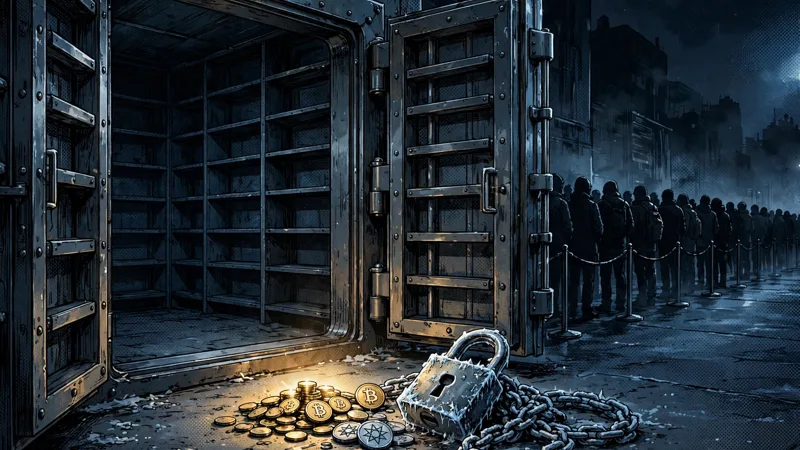
BitMart, the crypto exchange founded by Sheldon Xia, told its restructuring adviser Alvarez and Marsal that it holds just $1.9 million in liquid assets against a $319.5 million shortfall in customer funds, Nikkei Asia reported on November 23. Trading has been halted since August 26, 2026, and more than 12 million user accounts are frozen, according to the exchange's restructuring proposal.
The shortfall traces to a hack in December 2021. BitMart first disclosed that attack at about $150 million, while on-chain analysts at PeckShield estimated about $200 million at the time. In its September 30 proposal, BitMart put the loss at $319.5 million using prices from December 4, 2021: $164.1 million in Ethereum ($ETH), $96.5 million in BNB ($BNB), $51.5 million in Bitcoin ($BTC), and $7.4 million in other assets. The gap, the company said, was never made whole.
The 2021 hack that never got filled
BitMart kept operating after the hack, supported by revenue from a growing market, ForkLog reported. In 2026 the position worsened: trading-fee and listing income fell, the futures business lost money, and groups of traders exploited rebate programs and zero-slippage incentives to run arbitrage at the exchange's expense. A former employee told Nikkei Asia that listing revenue fell from about $1 million in October 2025 to about $250,000 by June 2026. Since May, social media posts triggered mass withdrawals, the company said.
The 18.8 percent yield pitch
Even as its finances deteriorated, BitMart kept marketing short-term savings products advertising up to 18.8 percent annualized yields on 14-day deposits, pitched to retail investors including Chinese nationals in the weeks before the July 26 wind-down announcement, Nikkei Asia reported. One depositor, a 26-year-old from Hangzhou identified by the pseudonym Venus, put $100,000 into one of the products on July 11, two weeks before trading froze.
From wind-down to restructuring
On July 26, BitMart announced a phased closure after nine years in business, citing operational conditions, the market environment and future strategic direction, without disclosing the financial gap. Trading stopped on August 26, with final closure planned for January 31, 2027. Users soon complained of withdrawal delays. On August 8, founder Sheldon Xia denied allegations that client assets had been misappropriated and said the team was taking inventory of funds. On August 21, the platform began preparing a restructuring as an alternative to full closure and engaged White & Case as legal advisers. On September 9, it appointed Alvarez and Marsal as financial advisers. On September 30, it publicly admitted the shortfall and presented a preliminary settlement plan.
The three options on the table
Under the preliminary plan, account balances would first be converted to a dollar equivalent using the weighted-average price of each token from July 26 to a date to be set later, with a court-appointed independent expert assessing claims. Users would then choose between three options: a proportional share of the liquid assets, which could include fiat, USDC ($USDC), PayPal USD ($PYUSD), Tether ($USDT), Bitcoin ($BTC), Ethereum ($ETH) and Solana ($SOL); a restitution token backed by funds BitMart recovers from the 2021 hack; or a tradable continuum token on a decentralized exchange, backed by investment assets, sales of illiquid holdings and, if the exchange resumes business, a share of future profits. The company also weighed a $10 million liquidity offer from an investor and judged it insufficient to cover the deficit.
The creditor fight over July 26 prices
The plan is contested. At least 74 creditors holding about $34 million have formed an informal committee and hired cross-border dispute lawyer Jack Ding, with law firms Young Conaway Stargatt & Taylor and Ashbury Legal also representing the group. The central dispute is the July 26 conversion: creditors holding Bitcoin or other assets that have risen since that date would receive less than current market value. A revised restructuring plan is expected in November, and BitMart aims to seek court approval in December 2026 or January 2027.
The collapse also lands in a shrinking market for centralized exchanges. Spot trading volumes across the ten largest centralized exchanges fell 14.2 percent quarter over quarter to $1.65 trillion in the third quarter, according to CoinGecko.
This article is news reporting and is not investment advice.
Sources
- Nikkei Asia, Crypto exchange's collapse hits Chinese investors hunting for yield (November 23, 2026) (primary source for the restructuring disclosure: BitMart's disclosure to Alvarez and Marsal of $1.9 million in liquid assets against a $319.5 million shortfall, more than 12 million frozen accounts, trading halted since August 26, the 18.8 percent yield products marketed to Chinese retail investors, the fall in listing revenue, and the 74-creditor group)
- BitMart, restructuring proposal (September 30, 2026) (primary source, official: the $319.5 million shortfall admission, the breakdown by asset at December 4, 2021 prices, and the three settlement options)
- ForkLog, BitMart Admits Asset Shortfall, Proposes Settlement Plan with Users (October 1, 2026) (secondary source: the September 30 admission, the July 26 wind-down announcement, the August 8 denial by Sheldon Xia, the White & Case and Alvarez and Marsal appointments, and the court approval target of December 2026 or January 2027)
- TFTC, BitMart $319M Shortfall Traps Chinese Yield Chasers (November 24, 2026) (secondary source: the Nikkei Asia reporting, the creditor dispute over July 26 prices, and the CoinGecko third-quarter volume figures)
MABOnChain Daily Brief
The key crypto and markets stories in one short, plain-language email. Free. Unsubscribe any time.
Prefer chat? Join us on Telegram Watch on YouTube
Keep reading

North Korean Launderers Route $600 Million of Binance Hack Funds Through THORChain, Researchers Say
North Korean money launderers are moving closer to cashing out funds from the record $6.3 billion Binance hack, routing more than $600 million through THORChain and $342 million through a coinjoin mixer coordinated mostly by a pseudonymous figure named Kruw, according to blockchain researchers Chainalysis, Elliptic and TRM Labs.
Zcash Developers Urge Holders to Move $300 Million Out of Sapling Pool as AI Math Threat Looms
Zcash developers Zakura urged holders on November 25 to move about 400,000 ZEC, worth roughly $300 million, out of the older Sapling shielded pool into Ironwood, warning that AI-era math advances could one day break Sapling's pairing-based cryptography and let attackers forge proofs. The team proposed a network upgrade to make Sapling withdrawal-only, with no activation date set.

Binance Lifts Withdrawal Suspension After $6.34B Hack, Completing 25-Day Recovery
Binance said on November 26 that its withdrawal recovery work is complete and the suspension from the October security incident has been fully lifted, 25 days after withdrawals began reopening on November 1. The exchange covered the affected assets with more than $6.34 billion in company funds, while wallets linked to the hack moved another $35.52 million in Ether the same day.

A 35-Cent Payment Can Expose a Bitcoin Wallet's IP Address, Bitcoin Core Researcher Finds
Bitcoin Core contributor Abubakar Sadiq Ismail showed that a payment of 18 to 34 cents can reveal the IP address of the computer watching a Bitcoin wallet, identifying the right node in 30 out of 30 tests on a test network. The leak also affects watch-only wallets and Tor users with clearnet connections, and no fix has shipped yet.